Get AI Briefings, Transcripts & Alerts on Local & National Government Meetings — Forever.
Warren County neighbors press commissioners over proposed 250-foot Verizon tower; hearing closed for private deliberation
Loading...
Summary
Residents pressed the Warren County Board of Commissioners Thursday with property‑value, health, fall‑zone and traffic concerns over a proposed 250‑foot Verizon tower; the board closed the administrative hearing and voted to deliberate in private after admitting email records that show the application was incomplete at times.
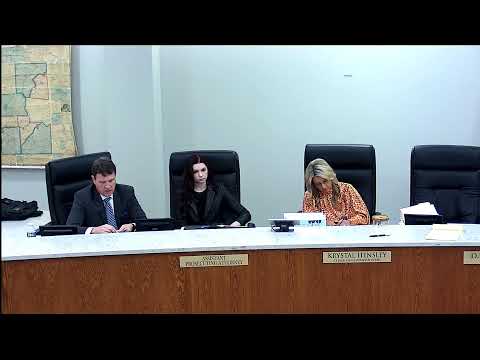
Warren County — Neighbors of a proposed 250‑foot telecommunications tower near South Nixon Camp Road urged county commissioners to deny the site plan, citing property‑value losses, health anxieties and potential fall‑zone risks, while the applicant said technical studies show compliance with federal requirements. After hearing testimony and admitting multiple exhibits, the Warren County Board of Commissioners closed the administrative hearing and voted to deliberate in private, with one absent commissioner to review the record before a final decision.
The county’s chief zoning official, Ray Dreck of Warren County Building and Zoning, told the board he had provided email correspondence (introduced as Exhibit 2) between the applicant — identified in filings as Royce Lyle of Tag Towers LLC — and the regional planning commission documenting communications from January 2025 through April 2026. Dreck said county zoning treats tower height as the height of the tower itself and not attachments, and that the board could require the applicant to move the tower four feet south to keep a four‑foot lightning arrestor from extending onto a neighboring parcel if commissioners deemed that necessary.
Opponents told a different story: Timothy Kirby, who said his house sits roughly 450 feet from the proposed tower center and whose property line abuts the site owner’s easement, described health concerns for family members and animals, worries about water runoff, and a potential loss in property value. “Protect the citizens,” Kirby told the board. Robert Bednar, whose property directly adjoins the parcel, said a new 250‑foot monopole would be a permanent change to the rural landscape and could adversely affect resale value and his ability to enjoy his land. Other residents described visual impacts, construction‑traffic hazards and fear of long‑term depreciation.
Several opponents cited studies and realtor guidance they said support declines of 5–20 percent in sales prices near large towers; the board heard both independent website summaries and a text message from a local appraiser (opponents acknowledged some of that material was hearsay or not a full appraisal). The applicant countered with a Valbridge Property Advisors appraisal and a compilation of broker interviews in comparable sales showing no measurable decrease in price in those pairings.
Legal and procedural issues also framed the hearing. Resident witness Tiffany Baston urged the board to apply the Telecommunications Act standard that a proposed tower must address a significant gap in service and represent the least intrusive feasible alternative; she argued the applicant had not demonstrated a good‑faith effort to pursue less intrusive sites. Opponents submitted emails and a call log suggesting an alternative tower location on State Route 350 might be available for co‑location; the applicant maintained that site was structurally unsuitable or would not meet Verizon’s coverage objectives.
Board counsel reminded attendees that federal law precludes local authorities from denying or conditioning siting on the basis of RF‑emissions concerns if the facility complies with FCC standards. The applicant’s witness, Kerbal Lane, testified that Verizon’s planned operations at the site would meet FCC emissions limits and described initial 'worst‑case' studies that are updated only when site changes occur.
The board took and marked multiple exhibits — including propagation analyses, search‑ring maps, FAA determinations, certified‑mail documentation, an FCC antenna‑structure registration and correspondence with the county auditor — and heard objections on authentication and hearsay for several opponent submissions. Board counsel noted that Exhibit 2 (the email history) showed the application was repeatedly incomplete and that county staff had issued incompleteness notices; that record, counsel said, supported tolling of the FCC shot‑clock and undercut an earlier concern about an imminent statutory deadline.
After the evidentiary portion, the commissioners voted to close the administrative hearing and then moved to deliberate in private, with Commissioner Jones and Commissioner Grossman voting yes; the board said Commissioner Young, who was absent, would review the hearing video and exhibits before joining deliberations. The board did not issue a decision at the meeting.
The matter will return to a public agenda when the board announces its decision. In the interim, the record contains competing factual claims about alternate sites’ availability, differing appraisals and studies about property‑value impacts, and contested technical assertions about coverage gaps and the feasibility of co‑location.