Get Full Government Meeting Transcripts, Videos, & Alerts Forever!
Get email alerts on the Supply Chain topic
No spam. Unsubscribe anytime.
VITUS warns higher freight and tighter global markets are tightening Alaska fuel supplies
Summary
VITUS Energy told lawmakers that refinery closures, re‑routed shipping, and spot premiums are raising costs; the company said it needs customers to prepay monthly and urged lawmakers to press for a Jones Act waiver extension to preserve emergency transport options.
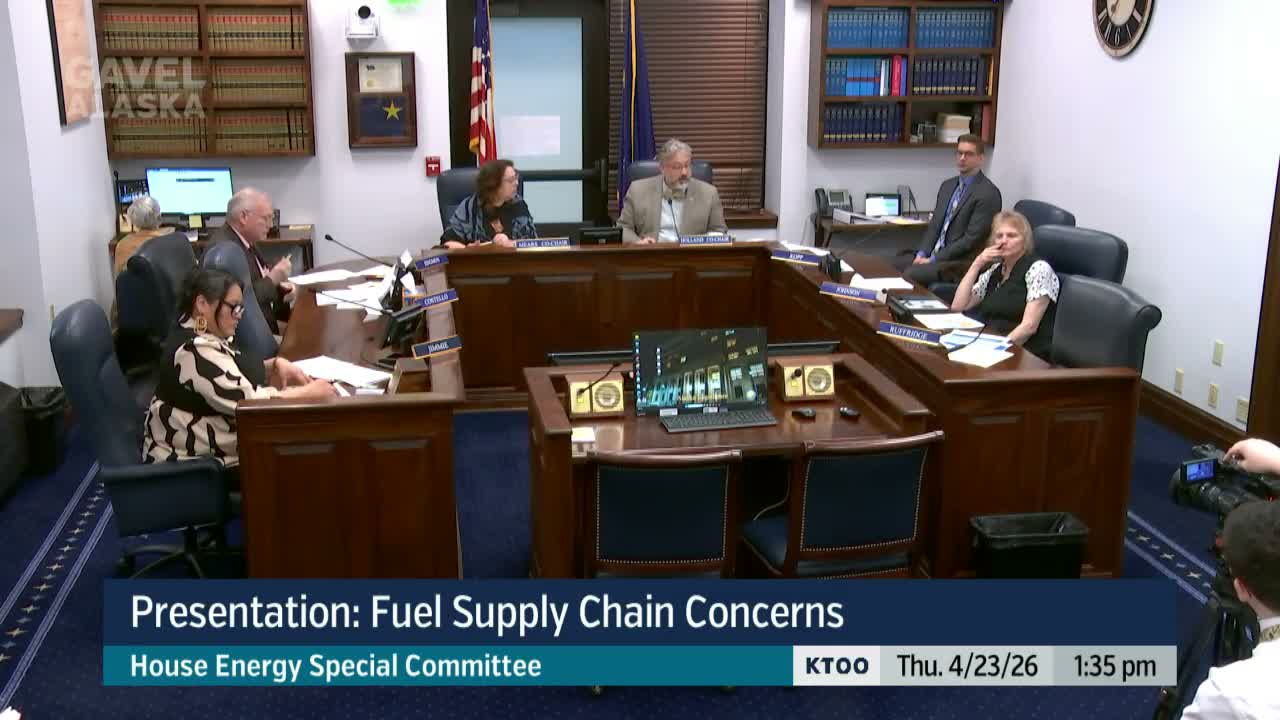
Mike Poston, director of sales at VITUS Energy, told the House Energy Committee that global market shifts and changing refinery outputs are already affecting Alaska’s supply mix. He said historically VITUS purchased refined product from South Korean refineries and Canada, but current military actions, export restrictions and higher global demand have cut some of those options and raised freight and 'dead‑head' costs.
Poston described a market now trading at premiums above published wholesale spot prices and said suppliers are having to bid higher to win cargo. He cautioned that transportation capacity has been repurposed and is more expensive, and that some California refineries have ceased operations, which further tightens available refined barrels.
On logistics and emergency options, Poston asked lawmakers to lobby for an extension of a short‑term Jones Act waiver that allows use of foreign‑flagged vessels to lift U.S. product for Alaska; he said the waiver cited in his testimony is scheduled to expire in May and recommended extending it through November to preserve emergency options.
On commercial terms, Poston said VITUS requires customers to fund orders in advance (monthly rolling funding milestones such as May 1, June 1, July 1) because the firm cannot extend open credit at current dollar values and market volatility. He warned that many communities lack the working capital to meet higher invoices, which will increase demand on the state’s bulk fuel loan program.
Poston also described practical limits on contingency options: flying fuel into villages is possible for very small volumes but aviation capacity is limited and can be overwhelmed if many villages need airlifted fuel at once. He urged early community ordering, better state‑level coordination, and work with stakeholders to check community ordering and storage plans ahead of time.
The company answered committee questions about sourcing alternatives (Canada, Gulf Coast via Panama) and said while contracted volumes exist for the season, other purchases remain opportunities rather than secured contracts, leaving some supply uncertainty.