Lifetime Citizen Portal Access — AI Briefings, Alerts & Unlimited Follows
Hampden planning board hears traffic and stormwater concerns over proposed restaurant at 2 Summers Road
Loading...
Summary
The Town of Hampden Planning Board continued a public hearing April 22 on Salmar Realty LLC’s special‑permit/site‑plan application to convert 2 Summers Road to retail and a restaurant with drive‑through, after extensive questioning about traffic counts, left‑turn conflicts, septic capacity in a wellhead protection area, and stormwater design; the hearing was continued to May 27 for revised plans and peer‑review responses.
The Town of Hampden Planning Board on April 22 heard detailed technical testimony and sustained public comment about a special‑permit and site‑plan application from Salmar Realty LLC to convert 2 Summers Road to retail and a restaurant with a drive‑through.
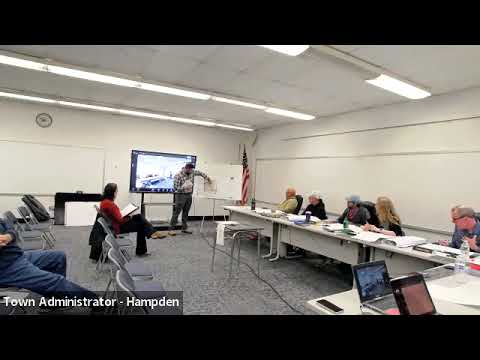
Acting chair Pat Boyne opened the public hearing and read the legal notice for Case 2026‑A, naming Salmar Realty LLC (CEO Peter Martins) and listing the property as 2 Summers Road, Lot 3, Parcel 12‑040‑000. The applicant’s team, led by Philippe Craybo of Barlow Health Associates, walked the board through existing conditions on the roughly 1.8‑acre site, proposed curb cuts on Summers Road and East Longmeadow Road, one‑way circulation around the building and a drive‑through lane with stacking areas and a separate rear parking area.
The Board of Health told the board the existing septic system was not sized or designed for a food‑service establishment and that a new Title 5‑compliant septic and pre‑operational inspection will be required before a food permit is issued. The hearing record also included a letter from Highway Superintendent Mark Langone urging expanded traffic counts that include school dismissal times and requesting on‑site containment of stormwater, stating in writing: “I oppose any overflow discharge into the town’s stormwater system.” (letter read into the record by the chair.)
Erin Purdett of Bowman Consulting, the project’s traffic engineer, summarized the traffic impact study, saying counts were taken during weekday peak periods in September and that trip generation used the ITE manual. She said the applicant’s analysis shows each project driveway operating at level of service C or better under the study scenarios and that the change in delay attributable to the project is “very minor.” Purdett noted one approach to the unsignalized intersection performs worse during peak periods independent of the project (LOS D in the morning, LOS F in the afternoon) and that the study did not expand the analysis area because the modeled project impact was small.
Board members and residents pressed the applicant on several technical points. Questions included whether the traffic counts should cover multiple days and school‑dismissal periods, whether pass‑by trips were correctly modeled, where 602 daily trips cited in the materials would queue, and whether the East Longmeadow driveway could be moved down the road to align with an existing opening at an adjacent mini‑mall to reduce turning conflicts. The applicant said queue storage on site would accommodate vehicles and that site plan revisions will show revised curb radii, extended stop bars and an updated accessible ramp location to improve pedestrian visibility.
Stormwater and water‑supply issues drew prolonged scrutiny. Craybo told the board the site has high groundwater and lies partially inside a Zone 1/interim wellhead protection area; because groundwater is high the design relies on surface swales feeding an extended dry detention basin (vegetated, grass bottom) with an outlet control structure to meter discharges so the post‑development discharge will match or reduce predevelopment rates. Peer reviewer Ty and Bond flagged several items the applicant agreed to address: model each swale separately in the HydroCAD files, document total phosphorus removal, clarify sediment forebay details and show explicit snow‑storage areas on revised plans.
Several residents and abutters urged more conservative remedies or design changes. One commenter urged the planning board to ask the applicant to work with the highway superintendent and abutters to relocate the East Longmeadow driveway so it aligns with other nearby driveways and reduces turning and cut‑through movements. Another resident warned that winter plow windrows can block surface outlets and push ponding onto the public roadway without careful design and a firm O&M (operations and maintenance) plan.
The board and applicant agreed to a continuance to allow the project team to update site plans and provide peer‑review responses and additional data on water supply, HydroCAD modeling, queuing and signage. The parties set the next hearing date for May 27, 2026 at 6:30 p.m. A procedural motion to adjourn the April 22 hearing was made and approved by voice vote at 8:16 p.m.
What’s next: the applicant will submit revised plans and updated technical attachments reflecting Ty and Bond and Bowman comments (drainage details, HydroCAD revisions, test‑pit labels, sidewalk/ADA ramp relocation, curb radii modifications and snow‑storage locations). The Board of Health must review and approve septic and food‑service permitting steps before any final approval to operate a food establishment.
Attributions in this article map to participants identified in the hearing record, including Acting Chair Pat Boyne, project representative Philippe Craybo (Barlow Health Associates), and traffic engineer Erin Purdett (Bowman Consulting).