Get Full Government Meeting Transcripts, Videos, & Alerts Forever!
Get email alerts on the Community Concerns topic
No spam. Unsubscribe anytime.
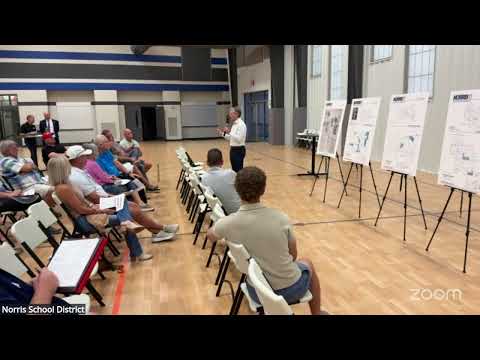
Residents press Norris leaders on enrollment, contractor choices and traffic during bond town hall
Summary
At a town hall on the proposed $34.8M bond, residents questioned adding parking amid declining enrollment, asked whether local contractors and student programs would be used, and pressed officials on traffic studies for the campus and nearby county road projects.
Several residents used the town‑hall Q&A to press district leaders for specifics about priorities and local impacts of the proposed $34.8 million bond. A public commenter who said they had reviewed district enrollment since 2015 asked "how are you justifying adding additional parking when you are projecting to have decline in enrollment?" Superintendent Derek Joel responded that the decision is driven by safety and congestion: more students and staff drive, events create demand for parking, and current unorganized gravel lots create unsafe conditions.
Community members also asked whether the district sought local contractors for HVAC and controls work and whether students could gain hands-on training through jobsite involvement. Joel said the district ran a competitive procurement and received bids from local and regional contractors; the vendor referenced in the maintenance contract discussion is described in the transcript as "Palo," a company that performs monthly maintenance and repairs. He said officials prioritized references, experience and cost but will explore student training where liability and safety allow.
Residents raised traffic concerns about the two entrances on 68th Street and asked whether a formal traffic-engineering study had been completed during peak school hours. Joel said the county ran a study but did so too late in the year; the district also provided vehicle and speed counts from the county sheriff's department. He noted the district is coordinating with a county 68th Street corridor project that could add turn lanes and offset movements to improve safety.
Others asked for alternative financing if voters reject the bond. Joel described "plan B" options that include pursuing lease-purchase financing for specific projects, reprioritizing work, or carrying small projects out of operating funds or smaller financing vehicles, but warned that phasing could raise costs as labor and material prices rise.
Throughout the session, community members requested more detailed numbers (for example, the exact number of new parking spaces and warranties for HVAC equipment); Joel said several of those specifics will be fleshed out during the design phase and posted on the district bond website.
The town hall closed with officials encouraging residents to review the materials online and to attend additional budget and board meetings; the bond will be decided by voters on May 12.