Get Full Government Meeting Transcripts, Videos, & Alerts Forever!
Get email alerts on the Permit Process topic
No spam. Unsubscribe anytime.
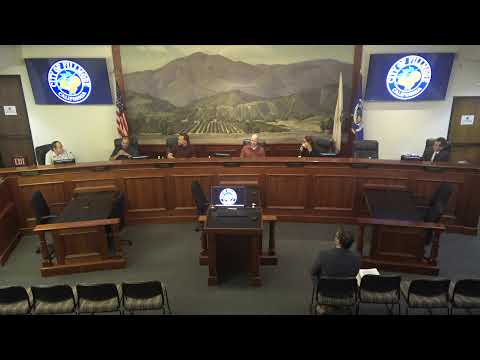
Planner walks commission through Fillmore's land‑use permit process
Summary
Planning staff summarized the city's entitlement and ministerial permit tracks, explained the 30‑day completeness review, CEQA screening, design‑review participants and typical plan‑check sequence, and said the counter is staffed for walk‑ins; commissioners asked for public checklists and clearer online guidance.
Brian, a planning staff member, outlined the two main tracks applicants follow: a discretionary entitlement phase for policy and code review, followed by a ministerial phase for zoning and building permits. He described the standard entitlement application as "about 40 pages" and said the city provides checklists and presubmittal screening to reduce surprises for applicants.
Staff described the completeness review clock under the state streamlining rules, noting the city has 30 days to determine whether an application contains the information needed to proceed. Brian said staff then assess whether a project triggers environmental review under the California Environmental Quality Act (CEQA), which can range from a negative declaration to an environmental impact report.
He reviewed the city's interdepartmental design‑review process, listing likely participants — fire, police, public works, engineering, city manager and city attorney — and said outside "responsible agencies" such as Caltrans or rail owners may also provide substantive comments. Conditions of approval are developed with those inputs and are shared with applicants so issues can be addressed early.
On post‑approval steps, Brian explained that projects typically go through two to three plan checks before issuance of a building permit, that building permits are effective for one year, and that inspections by building, fire and other departments are used to verify compliance during construction. He also noted the city issues a certificate of occupancy signed by the city manager when a project is complete.
Commissioners asked whether small projects — kitchen remodels, patio covers or re‑roofing — require the full discretionary application. Brian said many of those are ministerial and can be handled "over the counter" with a one‑sheet zone clearance, and that the counter is staffed from 8 a.m. to 4 p.m. for walk‑in service. Staff agreed to prepare a short online list of common items that do and do not require permits and to provide simple handouts describing inspection milestones.
The presentation concluded with staff offering to continue outreach and to post additional checklists and guidance on the city website to improve transparency for homeowners and small contractors.