Get Full Government Meeting Transcripts, Videos, & Alerts Forever!
Get email alerts on the Hud Cdbg topic
No spam. Unsubscribe anytime.
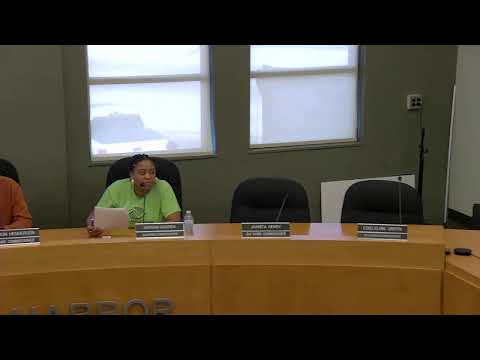
Benton Harbor staff outline HUD CDBG five‑year plan, commission advances proposal to full body
Summary
City staff described the HUD Community Development Block Grant (CDBG) five‑year consolidated plan and the 2026 annual action plan, saying the city will prioritize home rehabilitation, blight elimination and limited social services within funding and HUD caps; commissioners agreed to send the proposal to the full commission for final consideration.
Benton Harbor officials reviewed the city’s HUD Community Development Block Grant (CDBG) five‑year consolidated plan and the 2026 annual action plan and agreed to advance the proposal to the full commission for final consideration.
Manager Little told commissioners the CDBG process requires grantees to prepare a five‑year plan and an annual action year plan that implement HUD and local priorities. He said the city typically focuses on home rehabilitation, blight elimination and limited service programs — including a summer youth program and a feeding program for homebound seniors — and that last year the city’s CDBG allocation was about $382,000 and this year rose by roughly $6,000 to about $388,000. He noted HUD places program limits, including a 20% cap on administration ("that’s under $80,000 for us") and a 15% cap on activities HUD classifies as services.
Those constraints, Little said, mean most available funds go to housing rehab and occasional sidewalk or infrastructure projects when funding allows. "We generally allocate a significant amount to home rehab each year," he said, adding that typical rehab grants cover up to $25,000 per house and in some circumstances can reach about $30,000–$35,000.
Commissioners pressed for more detail on program outcomes and oversight. Commissioner Henry said he has repeatedly asked for annual performance or "exit" reports from organizations that receive CDBG funds so the commission can verify how money was spent and whether services reached residents. Henry said constituents continue to report problems but the commission lacks a consistent way to evaluate contractors. Little responded that HUD requires an annual report (a CAPER or similar performance report) and that the city produces and submits that material within 90 days of the fiscal year end; he said he would circulate the most recent reports to commissioners.
Commissioner Edwards asked whether alley projects are eligible under CDBG or whether those should pursue separate grants; Little said alley work would be eligible if the city identified funding but that he was also pursuing other programs and local strategies to address alley conditions in the short term. Commissioners also asked about previous sidewalk projects and Mr. Little said the city has previously spent more than a half‑million dollars on sidewalks when larger grant runs were available and that a past sidewalk extension on Empire Avenue used roughly $200,000 combined with MDOT assistance.
The chair proposed moving the economic development/CDBG item to the full commission for final action; the body consented to advance the item without a recorded roll‑call vote.
What’s next: The commission moved the plan to the full commission; staff said it will circulate recent CAPER/performance reports and bring the consolidated plan materials forward for formal consideration at a later meeting.