Lifetime Citizen Portal Access — AI Briefings, Alerts & Unlimited Follows
Hollister panel grants 2-year extension for Kramer Commons tentative map
Loading...
Summary
The Hollister Planning Commission approved a final two‑year extension for the Kramer Commons tentative map and its conditional‑use permit, after the applicant cited financial hardship, rising fees and prior environmental review that staff said still applies.
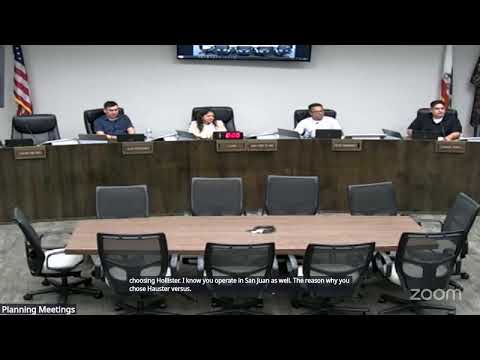
The Hollister Planning Commission voted to grant a two‑year extension for the Kramer Commons tentative map and associated conditional‑use permit, allowing the project’s approvals to remain in effect through April 23, 2028 if the applicant does not file a final map.
Staff presented the extension request, saying Kramer Commons is within the North Chapel Road master plan area, conforms to the current general plan and is covered by a previously certified environmental impact report. Planner Erica told commissioners the extension is the final two‑year extension allowed under city code and that the applicant filed the extension application within the required window. “This would be 2 years from today… That’s the final extension per our code,” the planner said.
Victor Gomez, representing Kramer Commons, told the commission the project team negotiated 8 duplex units (16 units total) “as sort of a compromise to get us to around the 15% inclusionary affordable by design,” and asked for the extension because of financing delays and rising building and impact fees. Gomez said the project will contribute roughly $2,500 per lot toward San Felipe Road frontage improvements as part of negotiated master‑plan obligations and pointed to linear‑park and pedestrian improvements in the Chapel Road planning area.
Commissioners asked whether the commission could impose new conditions when approving an extension and how the recently adopted general‑plan update affects previously approved projects. Staff replied that the commission may require conditions or deny an extension within its discretion, but that previously approved projects may continue under the rules in place when they were approved, and subsequent EIRs build on existing certified documents.
After discussion about affordability, timing and infrastructure impacts, a commissioner moved to grant the extension; the motion was seconded and the commission approved it. Staff noted the extension conforms with current zoning and general‑plan requirements and reiterated that it is the maximum extension available under city code.
The commission did not adopt new conditions beyond the standard requirements tied to the project’s prior approvals; staff will continue to monitor compliance as building permits or final maps are submitted.