Get Full Government Meeting Transcripts, Videos, & Alerts Forever!
Get email alerts on the Health Policy topic
No spam. Unsubscribe anytime.
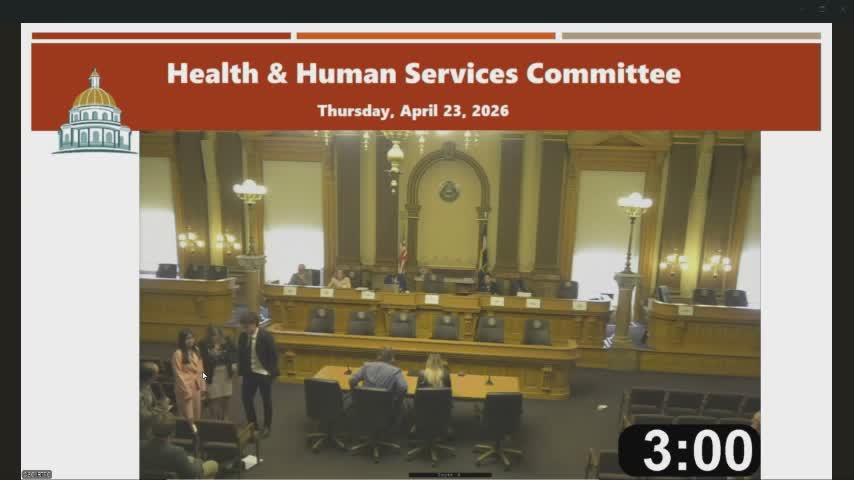
Committee advances broad hospital-administration bill amid debate over opioid-training repeal
Summary
Senate Bill 138 — a package of administrative changes for hospitals that streamlines licensure cycles, clarifies hospital discounted care access and alters reporting timelines — advanced to appropriations after sponsor amendments; debate centered on a provision repealing a state opioid/SUD continuing-education requirement.
Senate Bill 138, presented as a package of administrative and consumer-facing updates for hospitals and health facilities, won committee approval and was routed to the Committee on Appropriations after a series of sponsor-drafted amendments.
Sponsors described SB 138 as a modernization effort to reduce redundant paperwork, align reporting timelines and improve the hospital discounted care (HDC) program so eligible patients can obtain financial assistance more quickly. Supporters included the Colorado Hospital Association, rural health centers, Children’s Hospital Colorado and hospitals' government-affairs representatives. They said changes such as extending financial-reporting deadlines, moving certain facility licensure reviews to a biennial cycle and enabling hospitals to rely on streamlined verification tools would reduce administrative strain and help patients access discounts at the point of care.
However, the bill drew sustained criticism about section 4, which would repeal an existing state requirement for prescribers to complete modest opioid and substance‑use‑disorder continuing education as a condition of license renewal. Medical-society and public-health witnesses urged preserving ongoing training and called for stakeholder engagement; proponents argued federal MATE Act requirements and other training options reduce duplication. Several witnesses recommended narrower, collaborative fixes—such as allowing credit for recent federal training—rather than full repeal.
Sponsor amendments (the strike‑below amendment and technical fixes) were adopted. The committee adopted a set of amendments (L1, L5, L6, L8 and others) intended to address hospital concerns, set timing for Medicaid and HDC coordination, and provide rulemaking flexibility. After amendment adoption the committee voted unanimously to move the measure to appropriations.
Next steps: SB 138 will be considered by the appropriations committee; sponsors said they will continue stakeholder work on the opioid-education provision and veterinarians’ and dentists’ implementation concerns.