Get AI Briefings, Transcripts & Alerts on Local & National Government Meetings — Forever.
Cleveland presents year-one results of revised nuisance-property enforcement program
Loading...
Summary
Department of Public Safety staff outlined a seven-step process for enforcing chapter 6.30 nuisance rules and reported early results: about 68 current nuisance properties, 233 qualifying violations and 71 warning letters sent since program start; staff said 57 abatement plans were received and that fines can be certified to property taxes.
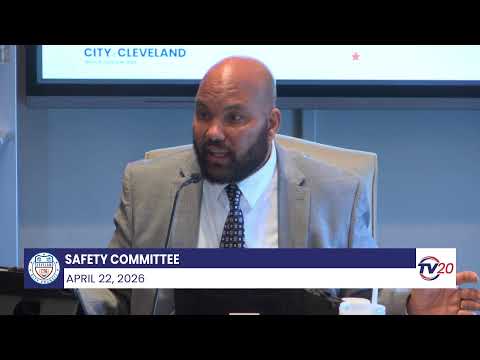
City public-safety staff walked the Public Safety Committee through the revised nuisance-property enforcement program on April 22, explaining the intake, review, notice and fine processes the division is now using to hold property owners accountable for repeated quality-of-life and criminal-activity complaints.
Assistant Director Jason Schachner and team summarized a seven-step workflow that begins with a 30-day Computer-Aided Dispatch (CAD) lookback and Power BI filtering to identify properties with repeated qualifying events, advances through sworn-officer review and the drafting of property files that include reports and bodycam evidence, and then issues warning letters with an abatement-plan requirement.
Staff reported monthly workloads and outcomes: roughly 162 properties reviewed per month; 71 warning letters sent since the program began; 57 abatement plans returned (about 84% of those warned); 17 properties later declared formal nuisances; and a current list of 68 nuisance properties representing 233 total qualifying violations. Twenty-one properties had more than three qualifying violations; three properties changed ownership after enforcement; and eight properties had $5,500 in fines assessed to the county (two of those were later granted appeals and removed). Staff said $132,450 in fines remained open but that full county tax-payment detail was not available during the briefing.
Council members asked for ward-level status reports, copies of abatement plans, and better public-facing materials so residents know how to report nuisance activity and what qualifies. Members also asked whether nuisance documentation can be shared with law department attorneys for liquor-license hearings and asked the department to produce short, council-branded pamphlets and neighborhood outreach materials. Assistant Director Schachner agreed to provide the requested data and to work with council offices on public information materials.
The committee did not take any votes on ordinance changes but asked the department to flag any needed tweaks to the ordinance now that the program is in active implementation.