Get AI Briefings, Transcripts & Alerts on Local & National Government Meetings — Forever.
Urbana Civilian Police Review Board wrestles with 2020 data, complaint process and taser review backlog
Loading...
Summary
At an April 23 working session the Urbana Civilian Police Review Board reviewed a draft six‑year annual report and debated whether to treat 2020 as an outlier, how to present demographics, complaint and suspension processes, chart types, and whether to change the ordinance’s suspension rule; staff reported a taser review backlog and the board set a plan to finalize a near‑final draft for a May 13 vote.
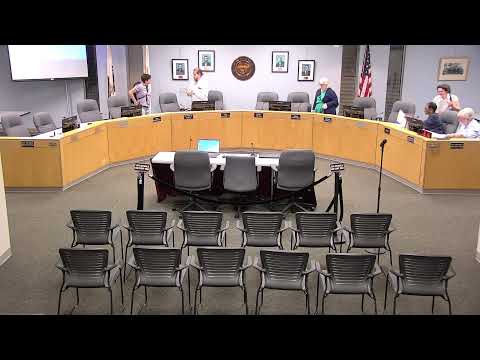
The Urbana Civilian Police Review Board spent the bulk of its April 23 meeting in a line‑by‑line working session on its draft annual report covering roughly six years of complaints and appeals, debating how to present data, whether to highlight 2020 as an outlier, accessibility of the complaint process, and how to handle taser display/discharge reviews.
A member who revised the draft said she expanded the history section, "I added the incident about Kurt Yord," to reflect community organizing and later reauthorizations, and the board debated whether to retain that level of detail or shorten the history for readability. Members discussed moving recommendations either inline under relevant data or grouped at the end; some argued in‑context recommendations make more sense, while others preferred a cleaner separation between objective data and policy suggestions.
Board members repeatedly flagged 2020 as an outlier due to one prolific complainant. One participant summarized the data issue: "There's 10 complainants. There's 97 complaints," and suggested using a footnote or separate visuals so the 2020 spike does not distort multiyear trends. Members proposed removing administrative and traffic complaints from some summary charts for clarity, and recommended alternative chart types (bar or multibar by year) instead of doughnut charts.
Demographics and equity questions drew extended discussion. A board member read demographic results for the 2021–2025 subset, saying that among those who identified a race, "92.6 percent of complaints were Black," and noted that all the appeals in the reporting period (small in number) were submitted by white residents. That pattern prompted members to recommend further analysis and clearer language about small sample sizes and access barriers to appeal. Staff said appeal forms and appeal instructions are provided to complainants and in hard copy with notifications, but members asked for clearer presentation in the report and a possible cross‑jurisdictional comparison with nearby boards.
Members also discussed procedural rules added in 2011 that allow complaints to be suspended (for example, because of pending criminal proceedings). Several members recommended reconsidering suspension rules or at least documenting the practice and its effects; one member recommended listing in the report which recommendations would require an ordinance change so the city council could easily identify suggested legal changes.
On taser reviews, staff reported the board had recorded about 128 taser displays and 12 discharges in the covered period, that the board had reviewed roughly 50 of those events, and that five reviews remain in backlog pending redaction or court restrictions. Members discussed whether the board should continue reviewing all displays or narrow its review to discharges (which would require ordinance change) and recommended the report make the backlog and the rationale for any recommendation explicit.
The board agreed to circulate a tracked‑changes draft two weeks before the May 13 meeting, aim to have a near‑final draft posted for review, and consider voting on a final or near‑final annual report at the May meeting. Staff will verify counts and the appeals log (members noted a three vs. four appeals discrepancy in the draft), add clarifying footnotes about 2020 and ward map changes (post‑July 15, 2024), and identify which recommendations require ordinance changes.
Next steps: staff will incorporate board edits, confirm data points against the tracking spreadsheet, add clarifying notes on 2020, demographic limits and the ward map, and circulate a tracked‑changes draft at least two weeks before May 13 for a planned vote at that meeting.