Get Full Government Meeting Transcripts, Videos, & Alerts Forever!
Get email alerts on the Education Budget topic
No spam. Unsubscribe anytime.
Alstern Community College requests 14.3% budget increase as new 53,200‑sq‑ft facilities come online
Summary
Alstern Community College told trustees and county commissioners it is seeking a roughly 14.3% increase in its FY2027 operations and capital request, driven by a 53,200-square-foot expansion, rising insurance costs—including an estimated $100,000 for cyber insurance—and multi‑million dollar annual maintenance needs. Trustees pressed college leaders on insurance procurement, building safety and workforce programs; no final budget vote occurred at the meeting.
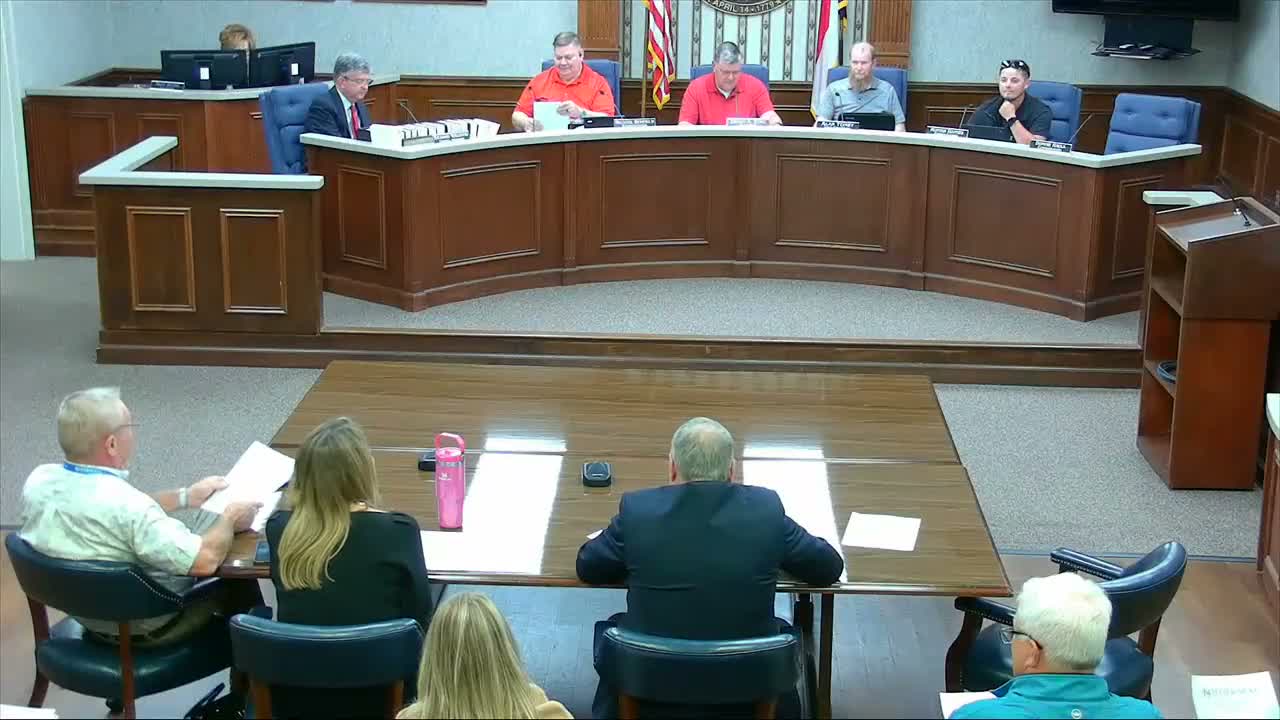
David Hunt, president of Alstern Community College, told the joint meeting of trustees and county commissioners that the college’s operating and capital request for fiscal year 2027 represents an increase of approximately 14.3% over last year’s request, driven chiefly by expanded facilities and rising operating costs.
"If you've had the opportunity to drive through campus lately ... we have about 53,200 more square feet than we had at this time last year that is in process and will be available for instruction in this upcoming fiscal year," Hunt said, saying the new space will be used to expand health‑care programs including EMT, paramedic and nursing pathways.
Why it matters: campus growth will raise recurring expenses. Hunt noted higher utility and insurance costs associated with the added square footage and said insurance—both property and cyber coverage—was a significant factor in the budget increase.
A commissioner asked, "What's driving the cyber insurance to be increased to that level?" Hunt responded that cyber coverage continues to escalate and indicated the college's current estimate was about $100,000 for that line item. A college staff member said the finance committee is pursuing a request for proposals (RFP) for the insurance package to solicit better pricing from carriers.
Hunt described how the college leverages philanthropic support to reduce taxpayer burden. "For example, the GlaxoSmithKline Foundation of North Carolina in this current fiscal year made possible two dollars 750,000 specifically focused on apprenticeships and pre apprenticeships, putting our people to work across Rutherford and Polk Counties," he said. (Transcript spelling normalized to "GlaxoSmithKline Foundation of North Carolina".)
The presentation also outlined workforce initiatives. Hunt said the college is emphasizing short‑term certifications and apprenticeships, has added leadership focused on workforce training, is hiring a full‑time electrical instructor and has directed scholarship funds to students in trade programs who are ineligible for federal aid. He described a new truck driver training program launched this fiscal year with support from ARC and the Cannon Trust/Foundation; Hunt said graduates can start at more than $60,000 a year after a roughly nine‑week program.
Trustees pressed the college on facilities maintenance and public safety. Hunt said the Administration Building, constructed in 1968 per the transcript, lacks fire suppression and a modern alarm system and that retrofitting can be costly. He cited a capital needs assessment (FCAP) completed in 2024 that identified approximately $49,000,000 in repairs across campus. The college is proceeding with projects such as a library renovation that will include window and door replacement to improve energy efficiency.
Hunt said the college now uses a maintenance ticketing system to track requests, analyze recurring repair needs and consider bundled contracting to save costs. He estimated the college faces several million dollars in annual repairs to maintain existing facilities and said some daily failures drive up long‑term costs.
What happened procedurally: the meeting opened with an agenda approval motion and closed with a motion to adjourn. The trustees and commissioners did not take a formal vote on the FY2027 budget request during the session; the presentation was entered into the record for the county’s budget development process.
The college and county officials said they will continue deliberations as the county incorporates the college's request into its broader budget message.