Get AI Briefings, Transcripts & Alerts on Local & National Government Meetings — Forever.
Planning board conditionally approves 24-acre solar arrays at Dylan Hopkins Airport, flags FAA screening limits
Loading...
Summary
Swansea’s Planning Board approved Revision Energy’s site plan for two ground-mounted solar arrays at Dylan Hopkins Airport with conditions requiring federal and state permits; debate focused on FAA limits on vegetation, fence slats as an alternative, and a decommissioning plan recorded for the town file.
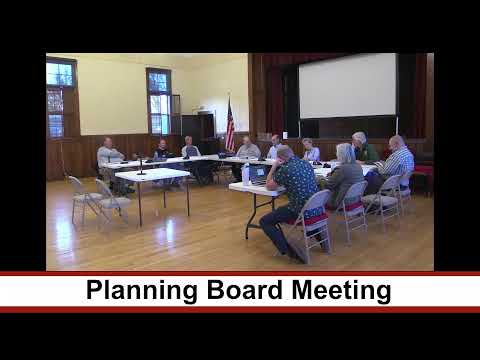
Swansea’s Planning Board voted to approve a site-plan application from Revision Energy, filed on behalf of the City of Keene, for two ground-mounted solar arrays spanning about 24 acres at Dylan Hopkins Airport (Tax Map 205 Lot 1). Approval was conditioned on receipt of required state and federal permits and included a plan for optional fence slats to screen equipment from Route 32.
Board chair Victoria Rek Ames reviewed the application history and said the project is atypical because it was submitted by one municipality for review by another. She noted the board had already considered requested waivers and had received a response packet addressing prior questions.
Board members raised three main concerns: glare and pilot safety, decommissioning of outdated solar technology, and visual screening along Route 32. The board reviewed a letter from the airport director that concurred with the glare analysis in the applicant’s packet; the board indicated general satisfaction with that letter.
The airport director, speaking to the board, explained FAA constraints: planting tall vegetation near the airport can intrude on navigable airspace and create wildlife habitat that presents safety risks. "When you plant trees, they're eventually going to become an obstruction at some point," the airport official said, explaining the FAA’s part 77 navigable-airspace surfaces and the reason agencies discourage new vegetation that could later be politically difficult to remove.
Because tall screening trees were precluded by FAA guidance, project representatives and Keene staff proposed inserting slats into the existing chain-link perimeter fence to soften the visual impact. Rebecca Landry, Deputy City Manager for Keene, told the board the city is trying "to be a good neighbor" and that slats could be removed or adjusted later if the town requested changes after construction.
Members debated slat color, extent, and timing. Several members suggested gray or muted beige as neutral colors; others voiced skepticism that slats would materially reduce visibility along long sightlines. The board discussed an option to include slats in the scope but evaluate their effectiveness in a site visit near project completion.
Technical questions also arose about stormwater details; project representatives confirmed updated detention-pond drawings that include a drain structure designed to meet FAA concerns about standing water attracting wildlife and (as discussed) the 48-hour drawdown guidance.
A planning member moved to approve the site plan with precedent conditions that the applicant obtain an Alteration of Terrain permit, an NH DOT driveway permit, and final FAA and EPA determinations; the motion also stated that the proposed fence slats be included with an option to remove or adjust them later. The motion was seconded and carried; staff said the applicant would receive a written letter documenting conditions.
The board placed the submitted decommissioning/commissioning plan into the municipal file so future reviewers will have a documented record of the project’s intended end-of-life procedures.