Get AI Briefings, Transcripts & Alerts on Local & National Government Meetings — Forever.
Southeast High credits PBIS, active supervision and student voice with dropping suspensions
Loading...
Summary
Southeast High School staff told the committee that a coordinated PBIS team, active supervision, restorative rounds and student-centered incentives helped lower suspensions at a 1,800-student campus; members urged the district to document and replicate the model.
Southeast High School presented a multi-pronged approach to preventing and de-escalating harm that staff and board members said could be replicated across the district.
"We're a school of 1,849 students," said Antonio Usman, the assistant principal, and Southeast’s team described a comprehensive set of practices including a PBIS team with teacher, counselor and student representation, monthly site meetings, active supervision in common areas, in-house interventions, and restorative rounds that allow students to voice concerns before incidents escalate.
Steve Ramirez, the school’s intervention coordinator, said the school built sustainability into its practices so the system would not disappear when individuals moved on: "A plan is only as good as the people that are on it," Ramirez said, and credited principal, parents and a consistent PBIS committee for keeping programs in place.
School climate advocate Tavion Halston described new student-facing outreach, including a podcast run by staff and students to build relationships and normalize supports. The team also uses incentives—"Jaguar bucks"—and small-group advisory lessons tailored by data. The presenters said seniors respond to expectations tied to prom eligibility and college-center supports.
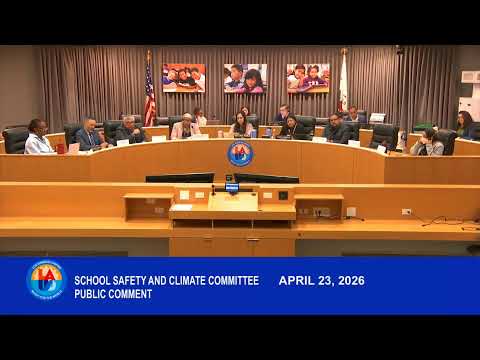
Board members praised the school’s monthly team approach, parent volunteer supervision and use of data. Committee members asked district staff to capture Southeast’s materials—flowcharts, templates, videos and sample advisory lessons—so other schools could implement similar strategies without reinventing them.
The committee did not adopt a formal resolution; members asked staff to explore documenting Southeast’s practices and presenting them at principal meetings next year.