Get Full Government Meeting Transcripts, Videos, & Alerts Forever!
Get email alerts on the Budget topic
No spam. Unsubscribe anytime.
Board approves first reading of $50.7 million FY2026–27 budget with no millage increase
Summary
The Fairfield County Board of Trustees approved the first reading of a $50,722,940 budget for fiscal year 2026–27, balanced with a $1,726,000 draw from fund balance and proposing no millage increase; the vote was announced as unanimous on first reading.
The Fairfield County Board of Trustees approved the first reading of the fiscal year 2026–27 budget totaling $50,722,940 on April 21, 2026. Superintendent Presley presented the recommendation and Chief Financial Officer Kevin Robinson reviewed multi-year revenue and expenditure trends before the board voted to approve the first reading.
Robinson told the board that about 60% of the district's revenues come from local property taxes and that a single large taxpayer accounts for a substantial share of the district's property-tax base. He said the district plans to use $1,726,000 from fund balance to balance the budget and is not proposing a millage increase for the coming year.
The proposed budget increases overall spending by about $1.5 million from the prior year's figure and includes salary adjustments: state-mandated increases for teachers (a $2,000 base plus step) and a step plus a 2% increase for classified and administrative employees. Retention bonuses are included; the district is not requesting additional full-time positions for 2026–27, Robinson said.
Robinson's presentation traced revenues and expenditures back to 2013, noting that property-tax revenues peaked around 2019, dipped then partly recovered, and that ESSER federal funds helped cushion recent years. He warned that continued flat or declining local revenues could require future draws from fund balance.
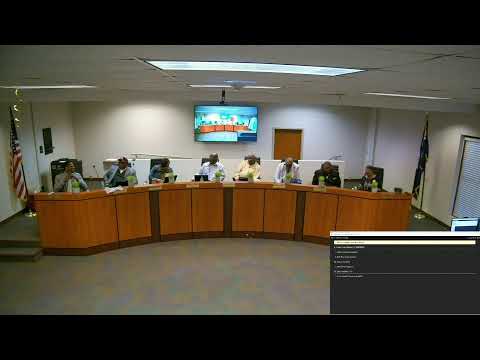
Board member Harrison Williams moved to approve the superintendent's recommendation for the first reading of the FY2026–27 budget; the motion was seconded and approved by the board, which announced the vote as unanimous by hand raise. This action constituted the first reading; the board may take additional readings or final adoption steps in subsequent meetings.
What happens next: The approval on April 21 was recorded as the first reading of the budget. The board did not announce a final-adoption date during the presentation; further action will follow in a later meeting as required by district policy and state law.