Get Full Government Meeting Transcripts, Videos, & Alerts Forever!
Get email alerts on the Eminent Domain topic
No spam. Unsubscribe anytime.
Council approves disposition amendment amid neighbor opposition over eminent domain and historic‑district impacts
Summary
Council approved Ordinance 26‑024 amending a disposition agreement and permitting sale to Vista Center Development LLC after a contested public hearing in which residents said the project threatened homes in the Greenwood‑Hamilton historic district and raised eminent‑domain concerns; the vote carried with abstentions and the council noted planning and landmarks review had taken place earlier in the approval chain.
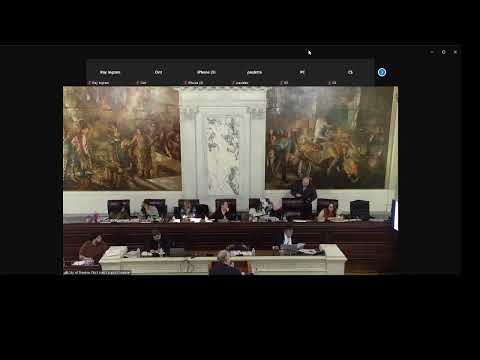
At second reading on April 21 the Trenton City Council approved Ordinance 26‑024, an amendment to a disposition agreement authorizing sale of certain city properties to Vista Center Development LLC. The ordinance drew sustained public opposition from neighbors and zoning‑board members who cited potential use of eminent domain and impacts on the Greenwood‑Hamilton historic district.
Paul Shore, who identified himself as principal of the 425 Greenwood project, urged the council to preserve 418 Greenwood Avenue and offered a counterproposal to rehabilitate it rather than allow residential redevelopment there. “We know how to get it done,” Shore said, describing a past record of local rehabilitation projects and warning that neighborhood plans had envisioned a non‑residential gateway adjacent to the transit center.
Caitlin Fair, a zoning board member and neighborhood resident, said the developer’s concept conflicted with elements of the Robling Gateway Redevelopment Plan—zoning intended to preserve urban character and limit building scale in the RPZ‑10 zone—and raised parking and traffic concerns. She emphasized that the biggest legal concern was the ordinance’s eminent‑domain language: residents wanted written protections for neighboring, owner‑occupied properties.
Developer representatives and a pro‑development speaker defended the project as a gateway improvement that could add ratables and replace vacant parcels, and the administration said landmarks and planning board processes had been followed. The redevelopment director said condemnation authority was limited in the agreement to specific properties (not the occupied homes residents feared) and that the planning board had earlier given unanimous approval for certain site plans.
On roll call the ordinance passed; the minutes record several abstentions. Council members who voted in favor said planning and landmarks review had been conducted and that site plan approvals and future planning board hearings would be the place to address design and mitigation. Opponents asked the administration to ensure better early community outreach for future proposals.
The council’s action moves the disposition agreement forward, but several residents and elected officials said they expect continued scrutiny during subsequent planning‑and‑design review and that legal and landmark processes remain available to raise objections.