Get AI Briefings, Transcripts & Alerts on Local & National Government Meetings — Forever.
Hennepin County HR study warns of shrinking pool of licensed officers, urges coordinated recruitment and role changes
Loading...
Summary
A Hennepin County HR study presented April 21 projects a declining pool of licensed law enforcement candidates over the next decade, recommends coordinated county‑wide recruitment and use of non‑licensed roles, and flags steep projected personnel cost increases.
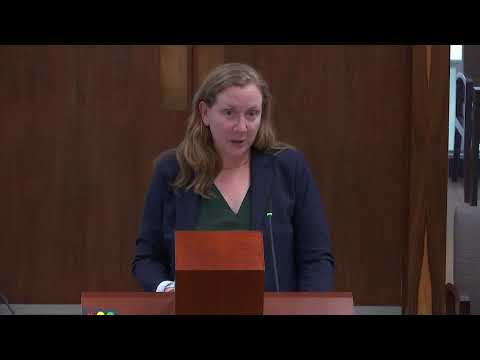
Giovanna Kone, Hennepin County’s chief human resources officer, told the Law, Safety and Justice Committee on April 21 that county analysis shows fewer candidates entering the law enforcement pipeline than are needed to replace retirees and other exits.
The labor study — compiled from Minnesota POST board licensing data, Hennepin County Sheriff’s Office data and local agency submissions — projects a continued decline in the number of candidates who pass the licensing exam. “The trend is negative over the next 10 years,” Kone said, adding that hiring to date has been buoyed by surplus candidates from previous years but that surplus will not be enough going forward.
Kone’s presentation also focused on a widening gap between budgeted full‑time equivalents and available licensed officers, and on rising personnel costs. The report projects roughly a 30% increase in personnel costs within five years and about a 68% increase by 2035, figures that incorporate wages and benefits.
Why it matters: county and municipal public safety agencies draw from the same candidate pool. Without changes to recruitment, retention or service models, smaller jurisdictions in the county could face chronic understaffing while larger agencies compete for scarce candidates.
Recommendations and next steps: Kone recommended a coordinated recruitment approach across agencies, ongoing workforce planning and consideration of non‑licensed roles (for example community service officers or social‑work co‑response teams) to shift duties that do not require a sworn officer. She also suggested evaluating ways to capture retired officers for investigative or part‑time roles and urged continuing to update projections annually.
Commissioners pressed for more detail on projection methods and on what Kone called the study’s conservative assumptions. Kone said the analysis used a 3% national employment growth assumption from the Bureau of Labor Statistics and that DEED’s 4–4.6% figures for the seven‑county metro were considered but the county relied on the more conservative national estimate for baseline forecasts. Commissioner Anderson asked how projected budgeted FTE growth was calculated; Kone said the report used national and statewide sources and then focused the analysis on Hennepin County data.
Several commissioners raised retention and role‑reassignment as priorities. Kone noted an observed increase in mid‑career exits and recommended retention work focused on compensation, workload and workplace culture. The presentation will be distributed to city chiefs, and Kone said the report is intended as a common baseline for further work and potential regional collaboration.
The committee accepted the report for discussion; no formal policy change was adopted at the meeting. Committee members said they expect follow‑up work to translate the study’s recommendations into operational or legislative steps.