Get Full Government Meeting Transcripts, Videos, & Alerts Forever!
Get email alerts on the Code Enforcement topic
No spam. Unsubscribe anytime.
San Antonio launches code enforcement strategic‑planning push, highlights faster response times
Summary
Code enforcement leaders told the Building Standards Board the department has improved response times and satisfaction and will run citywide listening sessions mid‑summer as part of a consultant‑led strategic planning process.
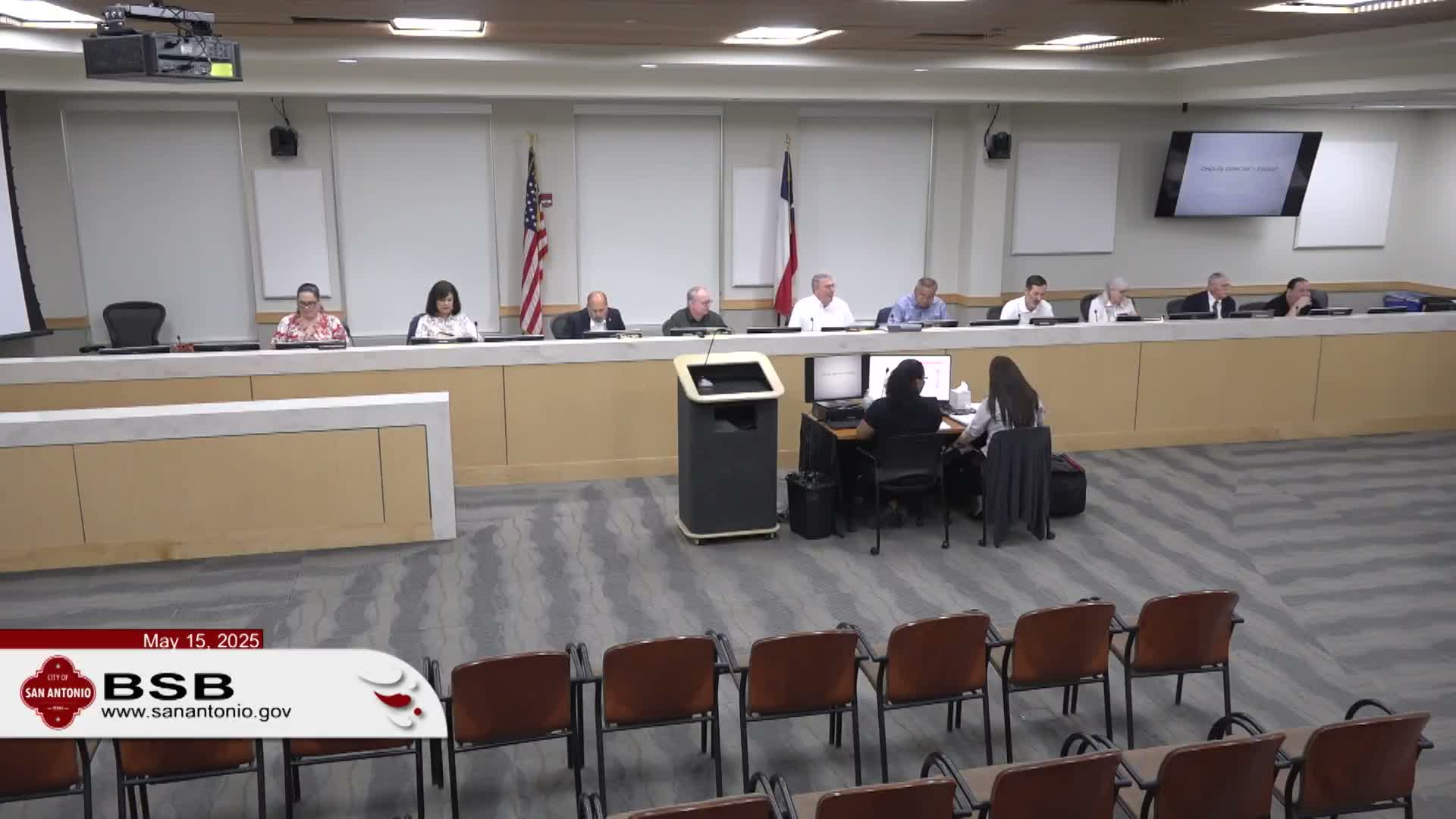
Danny Leguez, the city’s code enforcement administrator, told the San Antonio Building Standards Board on May 15 that code teams have handled more than 69,000 cases year‑to‑date and are meeting key response‑time targets.
"For tier ones we're at 1.23 days and for tier twos, we're at 1.34 days," Leguez said, adding that the department has a productivity goal of 65% and is currently at about 81%, while its compliance rate sits at 92% against a 90% target.
The figures were presented as part of a broader FY25 update and a kickoff of a citywide code enforcement strategic plan intended to improve community outcomes and communication between residents, council offices and internal stakeholders. Leguez said the city has hired a consultant to facilitate a community‑driven process and plans listening sessions in every council district starting mid‑summer, plus marketing outreach through the city’s "SA Speak Up" page, senior centers and libraries.
"We're gonna be meeting at each council district, citywide," Leguez said, urging the board that the process would be transparent and community‑led.
Board members pressed staff for clarifying data. Members asked how the three‑year averages are calculated; Leguez said they are weighted monthly. Members also requested that future reports add the costs and site counts related to illegal dumping cases — a line item not included in the performance summary. Staff agreed to pull that data and present it at an upcoming full board meeting.
Leguez highlighted ongoing work on graffiti abatement: staff have abated roughly 38,000 sites so far in FY25 against a 50,000‑site goal and said turnaround time is about one day.
The presentation noted the department’s International Accreditation Services recognition and described next steps in the strategic planning timetable: internal listening sessions for staff, mid‑summer community outreach across council districts, and later a full‑board retreat to review findings. Staff asked board members to propose stakeholder groups — including neighborhood associations, vocational programs and higher‑education partners — for targeted outreach.
The board did not take a formal vote on the plan at the meeting; staff said they will return with outreach schedules, a timeline and supplemental data (including trends and illegal‑dumping costs) for future meetings.