Get Full Government Meeting Transcripts, Videos, & Alerts Forever!
Get email alerts on the Operating Agreement topic
No spam. Unsubscribe anytime.
Authority approves operating agreement with Hay Day, removes indemnity language and adds reimbursement and insurance safeguards
Summary
The Seminole authority approved an operating agreement with Hay Day (operator) after negotiating edits to strike broad indemnification language, add explicit out-of-pocket reimbursement and quarterly/semiannual performance-pay alignment, and require additional-insured/waiver-of-subrogation insurance wording.
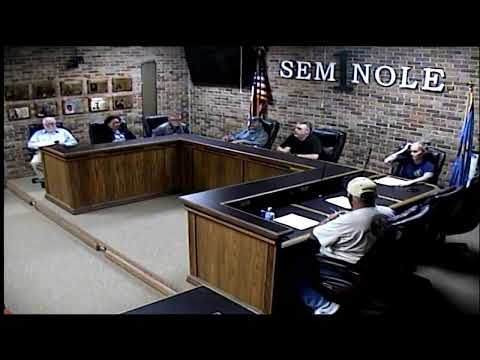
Seminole authority members voted to approve an operating agreement with Hay Day’s operator on terms that staff said will preserve the project’s tax-exempt bond status while giving the city more oversight of budgeting, reimbursements and insurance.
The authority’s staff described a base management fee in the draft and a sliding performance fee tied to gross revenue. Under the approved framework, the operator would receive a 4% base management fee in the current draft and an additional performance-based share starting at roughly 5% if gross revenue meets a conservative target staff and the operator estimated near $1.7 million. Performance tiers discussed ranged to 10% for higher revenue bands, 12% at certain thresholds and 15% for revenues at about $3.6 million, with performance periods aligned to semiannual calendar periods.
Why it mattered: the authority issued tax-exempt bonds to finance the facility, and legal staff cautioned that compensation must be structured on top-line revenue metrics — not net profit — to protect the bond’s tax status. Staff said monthly P&Ls and an annual budget with line-item detail will be required; the agreement contemplates P&Ls prepared within roughly 20 days and semiannual true-ups for performance pay so that peak seasonal months (November–December) are not over- or under-weighted.
Trey Bates, the operator who identified himself as owner and president of Bay Bay Entertainment, told the authority the company is preparing to hire a general manager and is planning marketing and group-sales outreach ahead of a targeted Sept. 1 opening. "We're basically looking at, roughly 50,000 visits as a start and each spend... $34," Bates said, describing the assumptions that produced the authority's preliminary $1.7 million revenue estimate.
Council members pressed the operator for concrete monitoring and customer-service metrics. The operator described weekly operational metrics (food costs, labor, revenue) and a POS-linked customer feedback system and said the company monitors Google reviews on a rolling basis and follows up on negative reports.
Legal and insurance changes: authority counsel flagged a paragraph that would have required the city to be indemnified by the operator and advised striking the indemnify language because municipal-insurer guidance warns against indemnities that could bind future governing bodies. "We're gonna have to strike the word indemnify," an agency official said. The authority directed staff to replace broad indemnification language with a hold-harmless/release formulation, to add a waiver-of-subrogation requirement where appropriate and to list the authority as an additional insured on specified general-liability coverages in Exhibit B or the certificate of insurance.
Reimbursements and timing: staff and the operator agreed that out-of-pocket operating expenses and overhead reimbursements will be paid to the operator no later than the 15th business day of the month following the month in which the expenses were incurred; the contract will also maintain an operations account funded with three months of operating expense that is replenished monthly.
The motion to approve the agreement as revised — including the indemnity edits, reimbursement language in the GIII section and added insurance language — was moved and seconded and passed on a roll-call vote. After the vote staff said the agreed-upon, edited draft would be placed in the meeting’s "gold folder" and treated as the final document for signatures.
Next steps: staff will incorporate the agreed wording changes, circulate the revised exhibit(s) (including the insurance certificate language) and return any final documents needed for execution. The authority signaled plans to monitor monthly P&Ls and semiannual performance-pay calculations going forward.