Get Full Government Meeting Transcripts, Videos, & Alerts Forever!
Get email alerts on the Rural Water topic
No spam. Unsubscribe anytime.
Perry County seeks $14 million for rural water project; consultant outlines BOT procurement plan
Summary
Consultants told county officials they submitted a roughly $14 million congressional funding request for rural water and recommended a build–operate–transfer procurement option under Indiana Code 5-23; officials said a preliminary list includes 350 families and the team expects at least 500 families could be affected if funded.
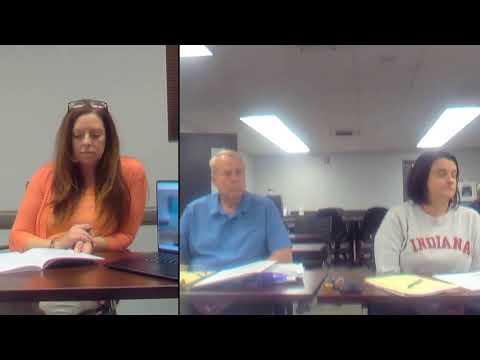
At a special Perry County meeting, a consultant team reported that county commissioners have submitted a congressional funding request for a roughly $14,000,000 rural water project and outlined a procurement path intended to speed construction if the grant is awarded.
"That would be about $14,000,000 project," the presenter said, describing a request prepared with commissioner input and submitted through a congressional office. The consultant said the firm could not make the federal request directly because it is not a registered federal lobbyist and worked with county staff to assemble the application.
The consultant recommended using a build–operate–transfer (BOT) public–private approach authorized under Indiana Code 5-23 to select a developer through an RFP, have that developer design and build the project, and cap county costs with a guaranteed maximum price. "That developer then is hired by the county to be a consultant ... they develop the project to your specifications," the presenter said, describing how the BOT method can control cost risk for the county.
Officials discussed scope and impact. The presenter said the project team has a list of 350 families who indicated interest in service and that the team expects "at least an excess of 500" families could be affected as lines extend and more households opt in; hookups would not be mandatory. A councilor underscored survey findings that water infrastructure was a top concern for residents.
The consultant said federal grant channels remain slow after recent federal-level delays, making congressional requests and state programs such as Indiana Finance Authority loans and grants important alternatives.
Next steps described at the meeting: the county will evaluate RFP and steering‑committee procedures for the BOT method, assemble pricing and implementation plans in anticipation of potential funding, and, if funded, the presenter said the team would aim to begin work by Oct. 1 and complete installation in roughly one calendar year.
Outcome: no formal county action was taken at the meeting; the presentation closed with an agreement to draft a prioritized strategy and circulate it for comment.