Get AI Briefings, Transcripts & Alerts on Local & National Government Meetings — Forever.
Syrian ambassador announces arrest tied to 2013 Tadamon massacre, urges international extraditions and cooperation
Loading...
Summary
Syria's ambassador said a suspect linked to the April 2013 Tadamon massacre has been arrested and called on other states and multilateral bodies to share information and support Syria's transitional justice processes, while answering questions about UN cooperation and regional tensions with Israel.
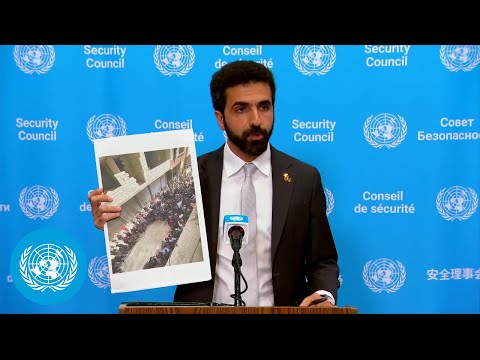
The Syrian ambassador announced the arrest of a suspect tied to the April 2013 Tadamon massacre and appealed to the international community to cooperate on extraditions and judicial support.
He described the massacre — when blindfolded civilians were forced to a mass grave, shot and later burned — and said survivors, activists and human rights groups kept the truth alive until Syrian authorities could act. "Thanks to the tireless efforts of the Ministry of Interior, we can announce that this perpetrator has been found and arrested," he said. "The arrest announced today represents a major achievement in this national effort."
The ambassador said Syria is pursuing a domestic transitional justice process "grounded in the very principles of international law" and urged other countries and multilateral actors to share information and activate judicial cooperation mechanisms, including extradition, so that perpetrators cannot find safe havens abroad. He emphasized the need to rebuild judicial institutions before formal requests can be made, saying the Ministry of Justice is working to establish fair trials and courtrooms that Syrians can observe.
On accountability, he said, "You may run, but you will never escape justice," and added that Syria will pursue suspects "at home and abroad" and work with states, international institutions and judicial mechanisms to bring them before courts.
Reporters pressed the ambassador about regional concerns and international engagement. One reporter accused him of being "very soft" on Israel and asked why his UN statements did not address Israel more forcefully; the ambassador replied that his recent speeches to the UN General Assembly and the Security Council did address Israel and that council members regularly described Israel as a destabilizing force. He cited arrests of Syrians and alleged use of chemical agents as topics discussed at the Security Council.
Bistan, a reporter with Al Jazeera Arabic, asked how extradition cooperation from countries hosting alleged perpetrators could be achieved. The ambassador said Syria is currently "working with international mechanisms and states on information sharing, intelligence cooperation" while it rebuilds domestic judicial capacity, and stressed that justice must be seen by Syrians in Syria.
When asked about the United Nations' role, the ambassador said UN mechanisms established over the past 14 years — including the Commission of Inquiry in Geneva, the Office of the High Commissioner for Human Rights and related investigatory bodies — have documented evidence and, for the first time, have access to Syria to conduct investigations. He said Syria looks forward to collaborating in ways that support national efforts toward justice.
The ambassador also addressed regional diplomacy, saying some U.S.-mediated talks between Lebanon and Israel had secured intended results while others did not, and urged the international community to press Israel toward a security agreement that would stabilize the region.
The briefing closed with the ambassador thanking attendees and offering to take questions.