Get Full Government Meeting Transcripts, Videos, & Alerts Forever!
Get email alerts on the Pact For The Future topic
No spam. Unsubscribe anytime.
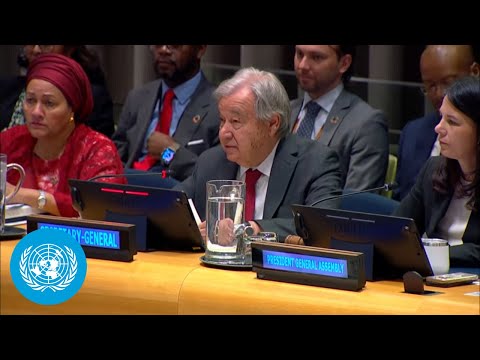
UN Secretary-General António Guterres urges concrete reforms under "pact for the future" and UNITY plan
Summary
UN Secretary-General António Guterres told the General Assembly that the "pact for the future" and UNITY institutional reforms are designed to restore public trust by focusing on prevention in peace and security, AI governance, financing for the SDGs, digital cooperation and stronger country-level UN capacities.
António Guterres told the General Assembly that the "pact for the future" and the UNITY reforms are complementary initiatives meant to rebuild public trust through ‘‘concrete action, meaningful reform, and results that people can see, feel, and believe in.’’
Guterres opened by thanking the president of the General Assembly for convening the discussion and said the remarks are part of a series of monthly briefings on UN reform workstreams. "As we all know far too well, trust is in dangerously short supply around the world," he said, listing fragmentation, polarization, armed conflict, constrained development resources, delayed climate action and an unregulated rush to new technologies as drivers of that deficit.
Why it matters: The speech laid out how the pact and UNITY aim to move beyond abstract pledges to operational changes across five areas Guterres called "crucial points of convergence": reinforcing the UN's three pillars with a focus on prevention; accelerating progress on the Sustainable Development Goals; aligning digital transformation and responsible innovation; improving financing and value for money; and strengthening country-level UN presence and coordination.
On technology and governance, Guterres highlighted new global initiatives, saying the UN has advanced "global efforts on the governance of artificial intelligence with the launch of the independent international scientific panel on AI and the global dialogue on AI governance." He also cited measures to redefine progress beyond GDP and the launch of a borrowers platform intended to help address global debt distress.
On peace and humanitarian policy he said the pact reinforces prevention and resilience and pointed to a forthcoming review of UN peace operations and his recent report that rising global military expenditure is slowing progress on the SDGs. He said the pact's humanitarian compact seeks to make the system "faster, leaner, and more accountable to the people it serves," with stronger common services and better links to long-term recovery.
Guterres said the UNITY reforms focus on the UN's internal capacity to deliver those political commitments, proposing shared digital infrastructure, a UN system data commons, pooled and core funding, shared services, and harmonized support structures to reduce duplication and improve efficiency.
Country-level delivery was a final emphasis: "That means resident coordinators with clearer authority, country teams that operate as one, and systems that reduce duplication and transaction costs and boost expertise," he said, adding that credibility is won or lost on the ground.
Guterres also pledged transparency and accountability measures to track progress, including a dedicated tracking mechanism and public dashboards with milestones intended to ensure disciplined implementation. The address framed the pact and UNITY as mutually reinforcing steps to make multilateralism more effective and credible.
The remarks form part of ongoing informal briefings and follow-up work; Guterres referenced multiple work packages and signaled upcoming outputs including the review of peace operations and further UN system reforms.