Get Full Government Meeting Transcripts, Videos, & Alerts Forever!
Get email alerts on the Code Enforcement topic
No spam. Unsubscribe anytime.
Fort Pierce special magistrate orders cleanups, business compliance and lien reductions after Dec. 10 hearing
Summary
Special Magistrate Jamie Barrow on Dec. 10 ordered deadlines for multiple property cleanups and nuisance abatements, gave a business 90 days to obtain a certificate of use or cease operations, and approved reductions of several enforcement liens to administrative costs with short payment windows.
Special Magistrate Jamie Barrow on Dec. 10 found multiple code violations in Fort Pierce and issued a mix of compliance deadlines, fines and lien reductions.
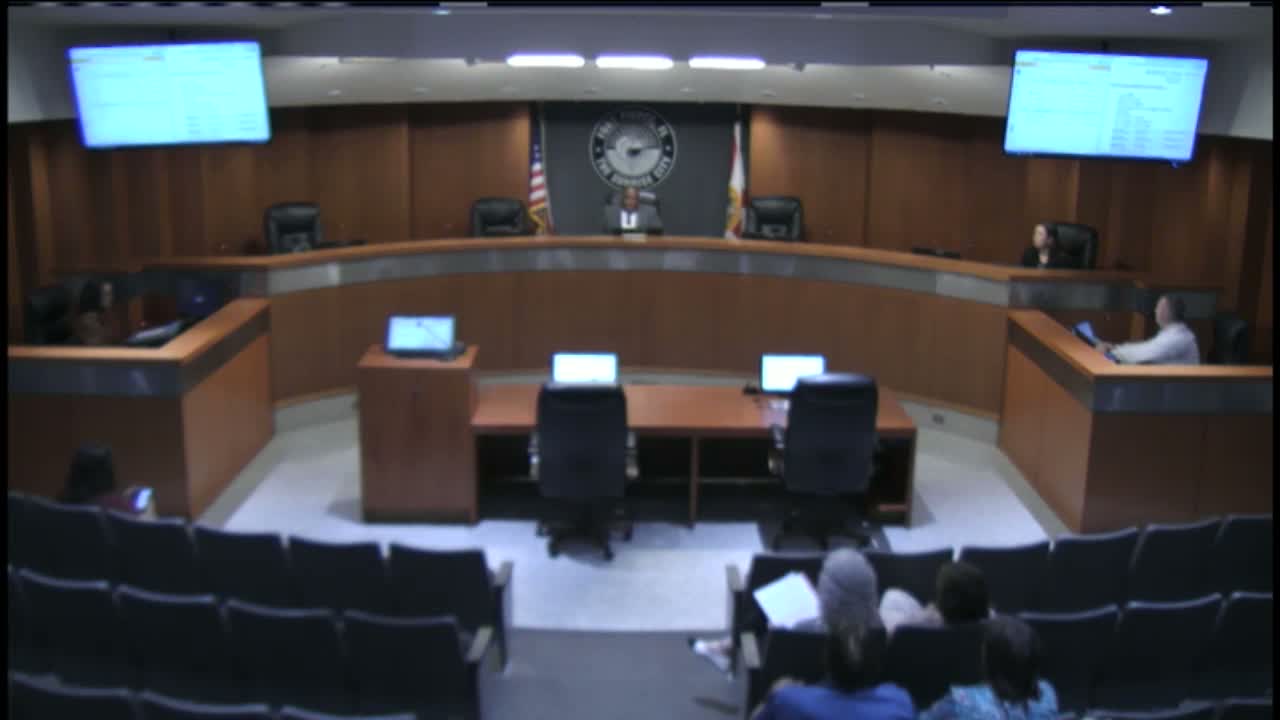
Barrow accepted evidence from city code officers and heard testimony from property owners and managers before issuing orders ranging from seven days for lot clearing to 90 days for some repairs and business licensing. The hearing was livestreamed and recorded.
Among the actions, Barrow found a violation at 2601 Ohio Avenue and gave owner Gerald Cheatham 90 days to cut grass, trim landscaping, remove debris and make minor structural repairs; the order carries a $100-per-day fine for continued noncompliance. Cheatham told the magistrate, “My health has been bad,” and said he has been unable to work and was caring for his father, explaining the delays in addressing the property. Charmaine Kirkland, a city code enforcement officer, presented photographs and said the violations remained outstanding.
Barrow also ordered that Tipsy Tiki, at 658 North Second Street, obtain a city certificate of use within 90 days or cease business activities. Officer Manuel Fernandez said the business was operating without the required certificate; owner John Molly told the court the space functions as a bar and that a hood/vent suppression issue and delays with the fire marshal have held up final permitting. Barrow warned that failure to comply would trigger a $250-per-day fine and, per city ordinance section 22-28, suspension of utility services to the premises.
At 1215 Raymond Avenue, property manager Katrina Simmons told the magistrate crews had pressure-washed the front of the structure and planned to paint remaining stained areas. The court granted 30 days to complete pressure washing and painting where staining, molding or deterioration persisted; the order carries a $250-per-day fine for noncompliance.
The magistrate granted lien reductions in three cases where staff recommended trimming fines to administrative costs after properties came into compliance. For 1725 Lakefront Boulevard (case 23-1741) staff calculated administrative costs of $1,325.75; Barrow ordered that amount payable within 60 days, with the lien reverting to the original $57,160 if not paid. Similar reductions for properties at 4306 and 304 North 28th Street reduced liens to $1,123.85 and $1,075.55 payable within 30 days.
The court also addressed multiple lot-clearing and nuisance cases and found nuisance conditions at several properties, ordering seven days for owners or contractors to cut grass, remove debris, trim trees and otherwise bring lots into compliance. In cases involving vacant or unsafe buildings, the magistrate ordered re-securing of openings with exterior-grade materials. For these nuisance abatements the order specified a $100-per-day fine for each day a violation continues and authorized the city’s nuisance-abatement program to abate and assess costs to the property if owners fail to comply.
Barrow reminded respondents of appeal rights: most orders noted a 30-day window to file an appeal; the business compliance order included the same procedural reminders. The hearing record includes city exhibits and photographs entered into evidence for each case.
The magistrate closed the session after staff reviewed notice procedures under state statute for hearings and postings.
The court listed numerous additional cases rescheduled or set for future hearings; respondents and property owners were directed to consult code enforcement or the building department for follow-up and payment instructions.