Get AI Briefings, Transcripts & Alerts on Local & National Government Meetings — Forever.
Bristol moves to stop mixing biosolids with yard waste, seeks bio‑drying and curbside bids
Loading...
Summary
Citing PFAS contamination and limited markets for biosolid compost, the town administrator told council the administration will seek bio‑drying disposal and contract curbside yard‑waste pickup; council voted to discontinue mixing biosolids with yard waste and to issue two RFPs with a transition target within 15 months. Estimated bio‑drying disposal cost: ~$113,000.
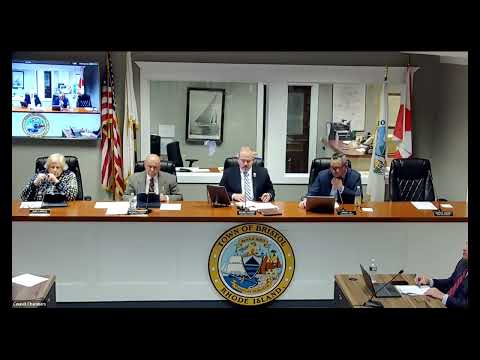
Town Administrator Contente told the council on April 22 that the town is having trouble selling compost made from biosolids mixed with yard waste because PFAS levels have reduced marketability in New England, and that available storage is limited by state licensing. The administration proposed three actions: stop mixing biosolids with yard waste at the compost facility; run a pilot and procure bio‑drying and transport/disposal services; and issue an RFP to evaluate contracting curbside yard‑waste pickup.
"We're having trouble selling the compost," Contente said, noting that some New England states have restricted land application of biosolid compost. He presented a cost comparison: bio‑drying was estimated at about $113,000 for disposal versus an estimated $347,000 without bio‑drying.
The administrator said the bio‑drying trial has a temporary permit from Rhode Island DEM and that the town can bio‑dry to reduce weight and volume before shipping the dried material out of state. He recommended issuing two RFPs: one for transportation and disposal of bio‑dried wastewater sludge and another for a curbside pickup contractor to manage yard waste. Contente said the plan aims to keep operations within the enterprise fund budget and that the town will continue to accept yard waste but will stop blending biosolids into compost.
Council members pressed on staffing, costs and continuity of service. Contente said attrition and current staffing levels reduce the likelihood of layoffs and that the administration is seeking proposals that demonstrate experience and service guarantees. He also said the town will continue to produce mulch from yard waste (without biosolids) and to provide materials to residents and contractors where feasible.
Action taken: council moved, seconded and voted to discontinue mixing biosolids with yard waste, to issue an RFP for bio‑drying and transport/disposal, and to transition yard‑waste collection services to a contracted model — with implementation expected within the next 15 months. The administration noted contingency plans if the pilot fails (direct transport/disposal as option 2).
Next steps: issue RFPs, evaluate bids, and report back to council with the pilot results and budget implications.