Get AI Briefings, Transcripts & Alerts on Local & National Government Meetings — Forever.
Glendale council approves paid-parking plan for Montrose Shopping Park, introduces ordinance
Loading...
Summary
The Glendale City Council voted 4–1 April 21 to approve a package of parking management measures for the Montrose Shopping Park, including pay stations, a $2 per hour on-street rate, a $1 per hour off-street rate and an employee-permit program; staff estimated initial pay-station procurement at about $50,000 and projected roughly $300,000 in annual revenue.
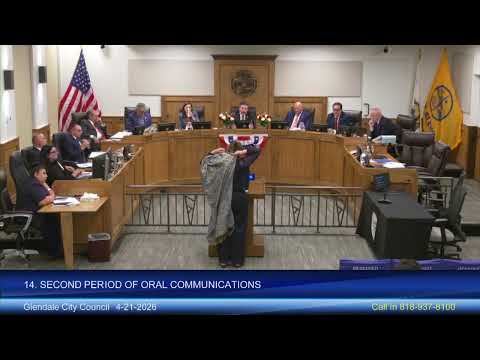
The Glendale City Council approved a package of parking-management strategies for the Montrose Shopping Park on April 21, voting 4–1 to back staff and consultant recommendations and to introduce an ordinance amending the municipal code to allow on-street and off-street paid parking.
The measures approved include installing 15–20 pay stations across the study area, raising on-street rates on Honolulu Avenue to $2 per hour, setting a lower off-street lot rate of $1 per hour, and expanding a low-cost employee-permit option to shift long-duration parking out of high-demand spaces. The council also authorized introduction of code amendments to sections 10.4.0.11 and 10.4.0.12 to implement the changes.
"We recommended a tiered approach so high-demand spaces stay available for customers while employees can park in lower-cost lots," Dan McKinney, managing principal at Transpo Group, told the council during the presentation. McKinney summarized the study area as nearly 900 publicly available spaces and said on-street turnover and employee permits would be key to freeing customer parking.
City staff told the council the up-front cost to procure the pay stations would be about $50,000, with an estimated program yield of roughly $300,000 annually under the proposed rates. "We estimate pay stations between 15 and 20 overall," a staff representative said. "We would recoup procurement costs in a few months based on projected revenue." (staff and consultant remarks in the record)
Residents and merchants raised objections during the public-comment period. "Montrose is a special, community-oriented place; monetizing parking risks changing its character," said Beth Brooks, a Montrose resident. Several business owners and callers said the survey used to guide the plan did not include a clear "free parking" choice and criticized what they described as forced-choice survey design. Caller Alex Balekian and other speakers also questioned historic consultant projections and past parking-fund performance.
City staff responded that the survey included free-text comments and that staff heard many requests for free parking in those comments, but that merchant groups and the Transportation and Parking Commission had supported a low-rate, pay-to-park option as a way to fund needed improvements (signage, resurfacing, EV charging infrastructure) and improve turnover where demand is highest. The staff presentation and the council discussion repeatedly emphasized an incremental, closely monitored rollout: "baby steps," as one council member put it.
Council Member Najarian moved to approve the recommended parking-management strategies; Council Member Brotman seconded. The roll call was recorded as Asadrian—No; Brotman—Yes; Garpetian—Yes; Najarian—Yes; Mayor Kasakian—Yes. The council also directed staff to monitor impacts and report back and to coordinate enforcement and outreach with downtown pay-by-phone systems to avoid confusion for users.
The ordinance was introduced for the council's consideration; a future reading and formal adoption will finalize the code changes and implementation details. Council members said paid parking will not apply on Sundays for events such as the harvest market, and staff said the pay-by-phone system will support remote extensions and will print zone numbers on meters to reduce user confusion.
The council asked staff to track impacts on businesses and neighborhood spillover and to share periodic reports so adjustments to rates, time limits and enforcement can be made if needed.
Ending: The council approved the parking strategy and introduced the ordinance; staff will proceed with procurement and community outreach and return with implementation details and periodic impact reports.