Get AI Briefings, Transcripts & Alerts on Local & National Government Meetings — Forever.
Jim Wells County declares local disaster over drought as officials seek emergency funding for Orange Grove
Loading...
Summary
The Commissioner's Court adopted a local disaster declaration April 24 to help cities and rural residents respond to drought and declining groundwater quality; Orange Grove officials described rising TDS levels and proposed a costly regional fix that will rely on state and federal grant funds.
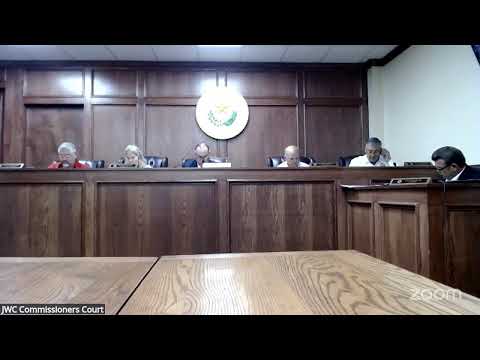
The Jim Wells County Commissioner's Court voted April 24 to adopt a local state of disaster aimed at speeding support for cities and rural residents affected by prolonged drought and declining groundwater quality.
County Judge (speaker 1) told the court the declaration is intended to "authorize the use of all available county resources to respond to the emergency" and to assist municipalities that have already filed declarations, including the city of Alice and Orange Grove. The declaration invokes authority under the Texas Government Code, chapter 418, to allow the county judge to take necessary actions during the emergency.
Todd Wright, city administrator for Orange Grove, told commissioners the community is seeing a sharp drop in aquifer levels and a measurable decline in water quality. "We've seen our TDS levels go up to 900 and up to, our highest has been 1,150," Wright said, referring to total dissolved solids in milligrams per liter and warning the city is approaching the secondary EPA threshold. He said increased regional groundwater pumping is stirring poorer‑quality water and that, absent changes, restoring the aquifer could take "multiple years."
Wright outlined two near‑term approaches the city is pursuing: buy treated/desalinated water from a Dallas partner (which would require Dallas to bring a third well online and cost millions per well) or rehabilitate local infrastructure to blend and treat water locally. He estimated drilling and related well work at roughly "$5 to $6 million apiece" and said casing and tying into an existing raw water line could require roughly $2 million; he described a total program cost "already at $78,000,000 to get these projects done." Wright said the city is pursuing an HB 500 grant through the Texas Water Development Board (a 100% funding opportunity) with an application due July 30 and a required expenditure deadline of Aug. 30, 2027.
Members of the court underscored the regional nature of the problem and stressed that county residents who do not live inside city water systems — farmers, ranchers and rural households — also need help. The judge told the court he and other county judges had discussed shovel‑ready projects with the governor's office and that a disaster declaration could help expedite permitting and funding.
After discussion the court moved, seconded and approved the disaster declaration by voice vote. The judge said he will file the declaration and return to court within seven days to extend it; extensions may last up to 30 days and must be brought back for further action.
What happens next: county staff and city leaders said they will pursue grant funding (HB 500 and other sources), coordinate regional solutions, and use the declaration to support applications and meetings with state agencies. No construction contract award or specific funding commitment was approved at the meeting.