Get AI Briefings, Transcripts & Alerts on Local & National Government Meetings — Forever.
Long-running data‑center ordinance debate turns heated; Commissioner Dave Berger submits resignation
Summary
A months‑long, contentious debate over a draft data‑center ordinance escalated at an Oliver County commissioners meeting, with residents charging a lack of transparency and the county's state's attorney preparing a draft; Commissioner Dave Berger announced his immediate resignation, citing personal attacks and threats to his health.
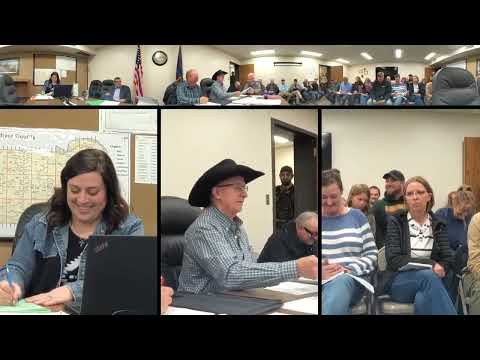
At a packed Oliver County Board of Commissioners meeting, a months‑long effort to draft a county ordinance covering data centers devolved into a heated public confrontation and the unexpected resignation of County Commissioner Dave Berger.
Berger read a prepared statement to the board resigning “effective immediately,” saying he had been subjected to “personal attacks, profanity, and baseless accusations” tied to a potential project and that the cost of continuing in office “far outweighs the work” he can do. “It is with a heavy heart that I leave this term unfinished,” Berger said, signing his statement “Dave Berger.”
The immediate catalyst was disagreement over who should draft a proposed data‑center ordinance. Commissioners had directed the county’s state's attorney to prepare a working draft; planning‑and‑zoning members and many residents expected the planning commission to produce the first draft and gather public input. Residents said a draft surfaced earlier than announced and that the public comment period was being undercut.
“You were told your comments are received until the eighth and then a draft will be composed,” one resident told the board, arguing that an early draft gave the appearance that public input would not be considered. The county's state's attorney responded that she was following commissioners’ directions and that her office had responded to “every single one” of roughly 60 emails received on the topic.
Multiple residents and local planning members urged more transparency and involvement from the planning commission, not a bypass of public process. “Transparency builds trust,” one commenter said; another told commissioners, “What’s happened in here today is breaking my heart.” Several residents explicitly said they had pursued open‑records requests to better understand the process.
Commissioners defended the amount of time already spent on the topic and noted several public meetings and hours of review. The state's attorney told the meeting her office had been answering and acknowledging every submission. “I have responded to every single one that came in,” she said.
The meeting became emotional as residents and officials traded sharp criticisms. In the aftermath, commissioners discussed the immediate need to fill the vacancy Berger’s resignation creates; state law and the county’s procedures for appointing a replacement will determine whether the board names a temporary appointee or moves to advertise the seat for election. The county's auditor and the state's attorney said they will research the timeline and legal requirements and return to the board with options.
What happens next: the draft ordinance process remains open. Commissioners and planning staff said they will continue accepting public input and will hold public hearings as required by state law before adopting any ordinance. The board will address Berger’s replacement and related timing at a special meeting or at its next scheduled meeting, with guidance from the secretary of state’s office on election timing and appointment rules.
Why it matters: the draft ordinance could establish the county’s local regulatory framework for large industrial projects (data centers, battery farms, similar facilities). Residents who oppose or seek stronger protections have argued the rules must be crafted with broad public input; supporters of a faster legal drafting process cite the need for legally defensible language prepared by counsel. The dispute revealed deep community divisions and has immediate governance consequences after Berger’s resignation.
No formal ordinance was adopted or rejected at the meeting; the process will continue with further public input and legal review. The board also agreed to look into appointment procedures for filling the now‑vacant commissioner seat.