Get Full Government Meeting Transcripts, Videos, & Alerts Forever!
Get email alerts on the Tax Exemptions topic
No spam. Unsubscribe anytime.
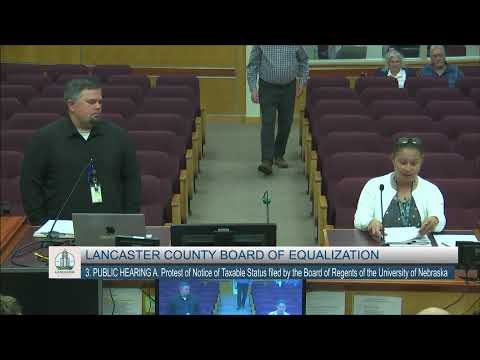
Board of Equalization denies University of Nebraska protest over on‑campus retail tax‑exempt status; motor‑vehicle exemptions approved
Summary
The Lancaster County Board of Equalization on April 21 denied a protest from the Board of Regents seeking tax‑exempt status for campus retail outlets (Starbucks, Chick‑fil‑A) and approved a set of motor‑vehicle tax exemptions for nonprofits and institutions.
The Lancaster County Board of Equalization denied a protest filed by the University of Nebraska Board of Regents that sought to classify certain campus retail operations as tax‑exempt educational property.
Jennifer Clark of the Lancaster County Attorney’s Office, representing the assessor, urged denial of the protest and distinguished truly educational university operations from retail franchises. Clark noted that while an educationally purposed retail operation (she cited a university‑run meat store used for instructional credit) can be exempt, national retail franchises operating on campus function as convenience retail and should not receive blanket educational exemptions.
On that basis a motion to deny the Regents’ protest carried on roll call. The board then opened and closed a public hearing on several motor‑vehicle tax exemption applications and approved exemption applications for a set of organizations including Cedars Youth Services, Madonna Rehabilitation Hospital, Lincoln Literacy Council, and others.
Jacob Van Pelt of the Lancaster County Assessor’s Office and other staff participated in the hearing; the board recorded votes to carry the denials or approvals on the record.
The denials mean the assessor will continue to tax the specified retail outlets as non‑educational property; the approved motor‑vehicle exemptions proceed under the assessor’s administrative process.