Get Full Government Meeting Transcripts, Videos, & Alerts Forever!
Get email alerts on the Transmission Policy topic
No spam. Unsubscribe anytime.
Regional commission adopts policy requiring transmission projects to evaluate stray and induced voltage risks to agriculture
Summary
The ERAD/Somerville subregional commission voted to adopt a Chapter 391 policy requiring proposed high-voltage transmission projects to evaluate and demonstrate they will not create harmful stray or induced voltage on agricultural or pipeline infrastructure and must show emergency-response operations will not be unduly restricted.
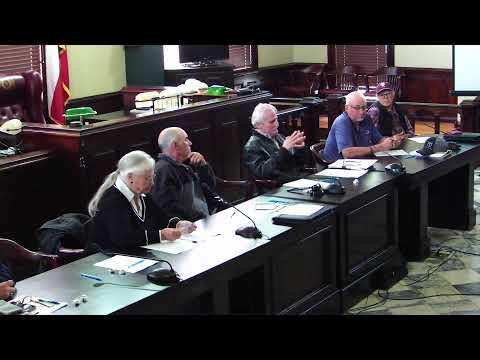
The ERAD / Somerville subregional commission voted to adopt additions to a Chapter 391 policy requiring proposed extra-high-voltage transmission projects to evaluate and demonstrate they will not create harmful stray or induced voltage on nearby infrastructure, the chair said at the April 21 meeting.
The policy language, read into the record by the chair, says that ‘‘extra high voltage transmission facilities, including 765 kilovolt transmission lines, may create conditions that contribute to stray or induced voltage on nearby conductive infrastructure, including fences, water systems, pipelines, and agricultural facilities, which may pose risks to livestock, particularly within dairy and confined animal operations.’’ The additions also state projects must ‘‘identify and evaluate all existing pipeline infrastructure’’ near proposed routes and show that construction and operation ‘‘will not create risk of induced current, corrosion, physical damage, or reduced integrity of such infrastructure.’’
Why it matters: commissioners framed the measure as a planning and public-safety step tied to rapid regional proposals for transmission and data-center infrastructure. The new policy explicitly links anticipated transmission routes to potential impacts on firefighting and emergency response, noting that ‘‘compliance with applicable workplace safety standards, including those established by the Occupational Safety and Health Administration, OSHA, may limit firefighting tactics and access in areas near energized extra high voltage transmission lines.’’ That language seeks to ensure projects account for local emergency-responder constraints.
The commission moved quickly after the reading. Gerald Cook moved to adopt the revised policy; Joanna seconded. The chair called for the vote; members answered "Aye," and the motion passed.
What the policy requires: under the adopted language, applicants must evaluate whether proposed transmission projects would create stray or induced voltages on fencing, water systems, pipelines and agricultural facilities; identify existing pipeline infrastructure within and adjacent to proposed routes; and demonstrate that construction and operation will not cause induced current, corrosion or physical damage. The policy further finds routes that ‘‘introduce increased wildfire risk or then restrict firefighting access, suppression tactics, or emergency response capabilities’’ are ‘‘inconsistent with the public safety objectives’’ of the commission and should be avoided.
Next steps and follow-up: the chair asked staff (named Joe in the record) to confirm implementation responsibilities and timing for the assignment. Commissioners also noted related outreach and regulatory matters are pending with federal and state agencies; the chair announced a U.S. Fish and Wildlife Service meeting scheduled for April 28 at 1:00 PM in Stephenville. The meeting adjourned at 2:30 PM.
The vote and the text read into the record are now part of the commission's minutes; no amendments or roll-call tallies beyond the recorded "Aye" were captured in the transcript.