Get Full Government Meeting Transcripts, Videos, & Alerts Forever!
Get email alerts on the POCD topic
No spam. Unsubscribe anytime.
NVCOG lays out timeline for Seymour plan of conservation and development
Summary
NVCOG consultants presented an overview of the Plan of Conservation and Development (POCD), explained statutory requirements under Connecticut General Statutes sec. 8-23, and outlined a community-engagement timeline targeting drafting in 2027 and adoption later that year.
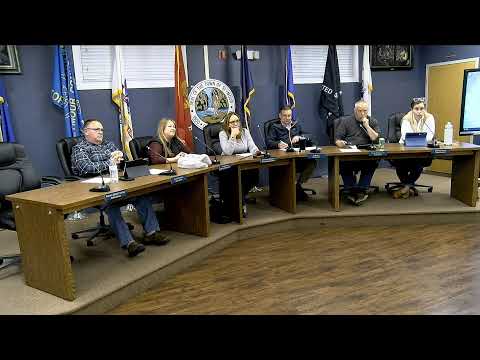
NVCOG consultants told the Seymour Board of Select Persons that the town’s Plan of Conservation and Development (POCD) process will emphasize community engagement and producing an implementable strategy rather than a document that sits on a shelf. "We really want this plan for Seymour to be something that doesn't just sit on a shelf," said Lana Harrison, acting division director of NVCOG.
Harrison said the POCD is required by Connecticut General Statutes Sec. 8-23 and must be updated every 10 years. NVCOG recommended including required maps and data, and using the POCD to identify regulatory and funding strategies the town can pursue—such as zoning changes or clearly documented projects that can support future state and federal grant requests.
Emily Ritchie, community planner, outlined topics commonly included in POCDs—housing diversity, protection of agriculture, future land-use recommendations and other statutory and recommended elements. NVCOG proposed starting significant public engagement in June 2026, running community work through summer 2027, drafting in 2027 and completing statutory reviews and adoption thereafter.
Board members asked whether a steering committee is required. NVCOG said it is optional; if the town does not form one, NVCOG will work directly with the planning and zoning commission. The consultants suggested a steering group composed of planning and zoning members, conservation commissioners, economic development representatives, staff liaisons and unaffiliated residents to provide diverse feedback.
NVCOG emphasized linking the POCD to capital planning and funding strategies so projects are presidentially documented when seeking outside grants. The town’s staff agreed to coordinate scheduling and public outreach, and NVCOG said it would seek to appear before planning and zoning in May or June to advance the work.
The board did not take formal action on the POCD at the meeting; next procedural steps include forming (or confirming not to form) a steering committee and scheduling NVCOG with planning and zoning for a May/June appearance.