Get Full Government Meeting Transcripts, Videos, & Alerts Forever!
Get email alerts on the Save America Act topic
No spam. Unsubscribe anytime.
Senator urges passage of Save America Act, saying it will 'make it easy to vote and hard to cheat'
Summary
On the Senate floor, a U.S. senator pushed the Save America Act, proposing mandatory voter photo ID and proof of citizenship for federal elections and routine SAVE-database checks of state voter rolls; he argued the changes respond to court precedent and gaps in DMV-based registration.
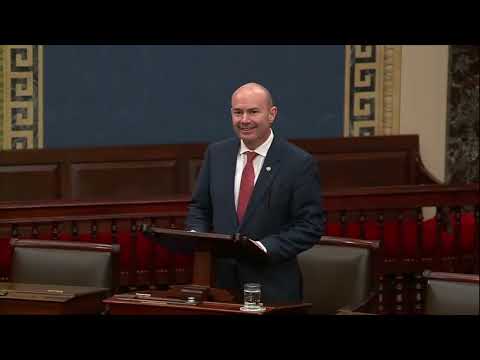
A U.S. senator delivered an extended floor speech urging colleagues to pass the Save America Act, saying the bill combines voter-photo identification with proof-of-citizenship requirements and routine checks of registrations against the Department of Homeland Security’s SAVE database to prevent noncitizens from voting in federal elections.
The senator framed the proposal in constitutional terms, saying federal authority over “the election of US representatives and US senators” (Article I, Section 4, Clause 1) allows Congress to set rules for federal elections. He cited the National Voter Registration Act (NVRA) and the Supreme Court’s 2013 decision in Arizona v. Inter Tribal Council of Arizona as background for why DMV-based registration currently prohibits states from requiring documentary proof of citizenship when using NVRA forms.
If enacted, the bill would require government-issued photo ID at the polls and proof of citizenship when a person registers new to vote for federal elections. The senator said acceptable documents would include a U.S. passport or a birth certificate paired with a government photo ID, and that the legislation creates an affidavit process for people who cannot produce those records. Under that affidavit process, the state would verify the sworn statement; if the state finds the affidavit false, the senator said there would be legal consequences under perjury statutes.
The senator warned that current law is difficult to enforce because DMV registrations rely on a registrant’s signature certifying citizenship, not on documentary verification. He argued that between expanded driver-license access for noncitizens in many states and high levels of immigration in recent years, the risk of noncitizen registrations has increased; he offered an estimate—described as approximate—of “10 to 15 million” noncitizens having entered the country during 2021–2025.
He defended the bill against three common objections. First, he rejected a federalism objection, citing Article I, Section 4 and noting the Congress already sets federal rules for federal elections. Second, he disputed claims the legislation would disenfranchise women, saying name-change procedures, marriage certificates, court orders and the affidavit process would prevent inadvertent exclusion. Third, he said accusations that the measure is a return to Jim Crow are unfounded and insisted safeguards are in the bill to avoid disparate impact; he called repeated comparisons to Jim Crow “false and defamatory.”
The senator invoked historical Supreme Court decisions (including Wickard v. Filburn as an example of commerce-clause expansion) to argue the modern administrative state has expanded federal power and complicated enforcement. He urged colleagues to pursue cloture and persist with floor debate, comparing the current effort to historical fights over civil rights legislation and saying popular support for his bill is strong.
He closed by telling colleagues he would continue to press the case on the floor until the bill passes. No vote or formal clerk action on this legislation was recorded in the transcript.