Get Full Government Meeting Transcripts, Videos, & Alerts Forever!
Get email alerts on the Environment Litter topic
No spam. Unsubscribe anytime.
Residents press county on roadside dumping as DNR outlines limits of enforcement
Summary
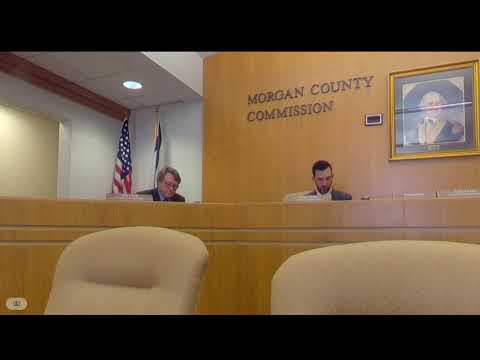
At the March 18 Morgan County Commission meeting, residents raised recurring roadside‑dumping concerns; a Department of Natural Resources officer described how open‑dump complaints are handled, enforcement limits, and practical steps residents can take, while commissioners discussed bringing DEP representatives to a future meeting.
Residents urged the Morgan County Commission on March 18 to do more about repeated roadside dumping and open‑dump sites, saying many complaints go unresolved.
Wendy Barouch, in public comment, said she remains concerned about “the litter problem in the county” and reported following up with the state Department of Environmental Protection. She asked the county to coordinate with state officials and to help residents navigate reporting and cleanup resources.
The commission had invited Department of Natural Resources officer Brad Robertson to the meeting. Robertson said many complaints are passed to the DEP for investigation and described how enforcement typically proceeds: a first notice and opportunity to clean up, then a citation if the site remains. He summarized the state standard for household service: “The state law says you have to have trash service or proof of disposal for once a month,” and noted fines escalate for commercial or industrial violations.
Robertson told commissioners that practical enforcement is often constrained by staffing and evidence. He said game cameras and documented vehicle tags are among the most useful evidence items: “A lot of time they don’t get a good enough night picture, but a tag or a clear photo makes a difference,” he said. He added that some dumping predates current law and can be effectively “grandfathered,” complicating removal.
Commissioners and residents exchanged details about how to route complaints and what the county can do. Commissioners said they will try to compile addresses and give them to the DNR representative for follow‑up and requested that DEP staff be invited to a future meeting to explain available program funds for open‑dump cleanup.
The meeting produced no new local ordinance or staffing decision; commissioners said they will pursue better coordination with state agencies and explore budget options at the next budget cycle.
The commission asked residents to keep submitting addresses and, when possible, photographs or other evidence. The commission plans to invite a DEP representative to a future meeting to clarify program timelines and funding options.