Get Full Government Meeting Transcripts, Videos, & Alerts Forever!
Get email alerts on the Airport Infrastructure topic
No spam. Unsubscribe anytime.
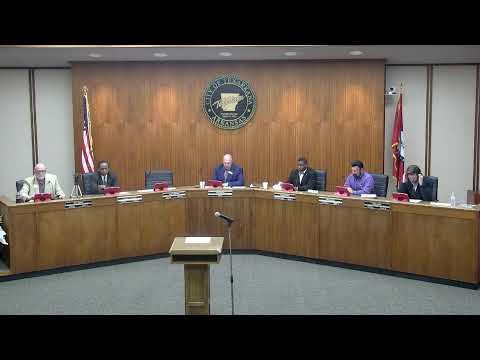
Texarkana board approves airport engineering contracts and moves forward on JDC demolition bids amid FAA safety requirement
Summary
The board approved engineering contracts for taxiway widening and runway work and authorized seeking bids to demolish a juvenile detention center on airport property after airport staff said the FAA requires removal for a 500-foot runway extension; board members pressed for FAA documentation and discussed potential exemptions.
The Texarkana Board of Directors voted to authorize a series of airport actions in March 2026: an engineering services agreement to oversee widening of Taxiways B and D and conversion work on Runway 13 (engineering not to exceed $773,200), and authorization to solicit bids to demolish a juvenile detention center (JDC) located on airport property with an upper bid authorization of $317,900. The board also approved a separate engineering contract to administer demolition work (not to exceed $82,100).
Airport Director Paul told the board the broader airport program (including runway lengthening and overlays) is funded in part by an $11 million Federal Aviation Administration grant secured with congressional assistance. He said the engineering portion for the widening and conversion will be covered 95% by federal/state aviation funds during the current phase of design with no local match for that item. An engineer advising the board said widening occurs mainly at intersection fillets and can vary roughly 10–20 feet.
Multiple directors pressed staff for additional details about the JDC demolition, asking why the FAA requires removal of the building while a nearby interstate and other occupied properties remain. A board member asked whether the county considered retaining the facility to serve juveniles locally; another urged staff to seek exemptions. Paul said the FAA's Airport District Office in Fort Worth had indicated the agency would not authorize continued use of the building because the runway protection zone must remain free of occupiable structures. "The FAA will not provide an exemption that would allow us to utilize that building," Paul said, and he offered to obtain FAA letters and advisory-circular guidance for the board.
Board members also asked about procurement and costs: staff explained that demolition and related work must be publicly advertised and bid, that the $317,900 cap is an upper estimate drawn from a $400,000 grant (after engineering fees), and that the final contract value may be lower depending on bids. Staff said the demolition scope includes clearing trees that obstruct approach surfaces, asbestos/lead surveys required for categorical exclusions, and site surveys to update the airport layout plan.
The board debated a motion to table the JDC engineering resolution and seek an FAA exemption; the motion was put to roll call and received mixed votes (Assistant Mayor Brewer and one other director voted to table, several voted no). Staff reiterated that, absent an FAA exemption, the runway extension cannot proceed while the occupiable building remains within the runway protection zone. The board ultimately authorized the demolition bid process and related engineering services, with roll-call approval recorded on the demolition bid resolution and the engineering contract votes.