Get AI Briefings, Transcripts & Alerts on Local & National Government Meetings — Forever.
Rep. Louis Riggs urges feasibility study of Mississippi hydropower, seeks standalone rural development office
Loading...
Summary
At a House Agriculture Committee hearing, Rep. Louis Riggs said he will offer a committee substitute to House Bill 2998 keeping a feasibility study of retrofitting Upper Mississippi locks and a statutory rural development office in DED; witnesses cited a roughly $3 million, three‑year study and noted Army Corps jurisdiction.
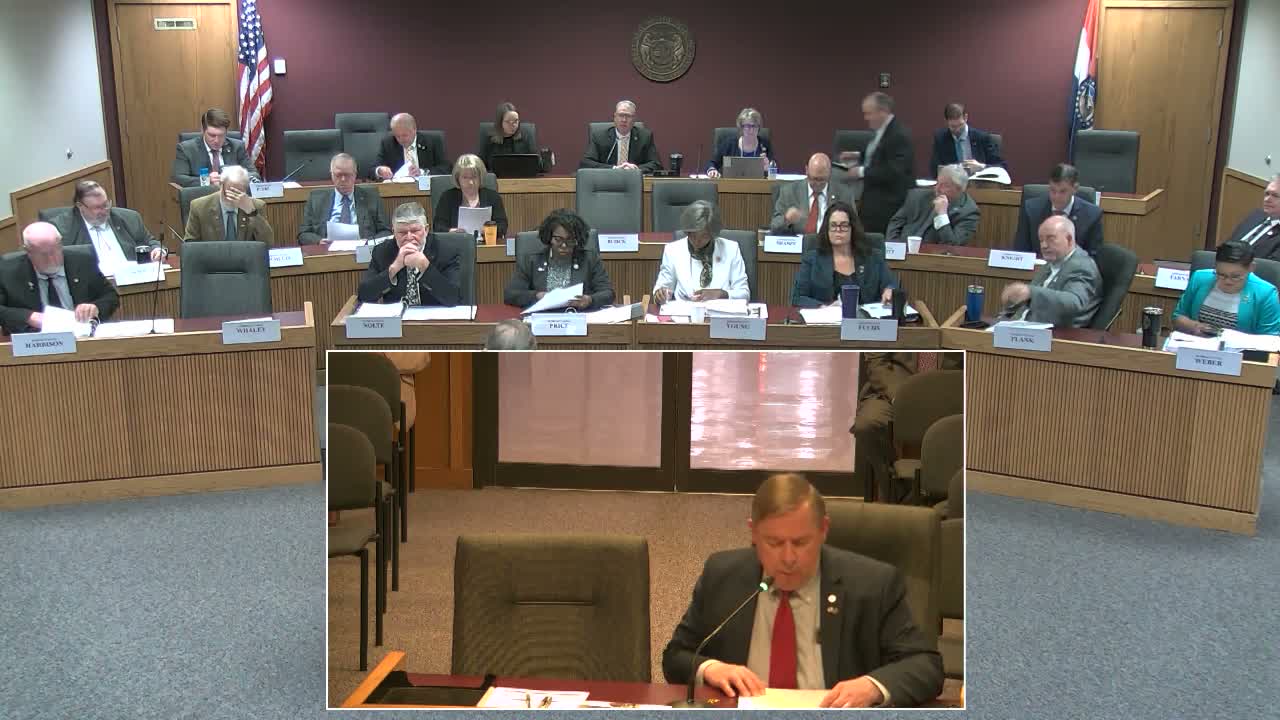
Rep. Louis Riggs (R), sponsor of House Bill 2998, told the House Committee on Agriculture that he will advance a committee substitute to retain two provisions: a feasibility study of hydropower opportunities in the Upper Mississippi River Basin and creation of a standalone rural development office within the Department of Economic Development (DED).
"Missouri has the privilege of being served by the 2 greatest servers in North America, the Mississippi and the Missouri," Riggs said, arguing the rivers provide a continuous flow that could support reliable hydropower. He said the substitute will remove other portions of the original bill and focus on the Upper Mississippi study and the rural development office.
Why it matters: Riggs framed the study and office as measures to boost rural economic development and energy supply. He said rural Missourians account for nearly 40% of the state's population—about 2,000,000 people—and that embedding a rural office in statute would provide sustained capacity beyond existing DED regional teams.
Committee members pressed technical and scheduling details. Representative Fuchs asked why the rivers have not been used more for power; Riggs replied that many existing locks and dams were designed for navigation and date to the 1930s, making retrofits expensive and technically complex. Representative Plank and others raised underwater turbines and run‑of‑river platforms as possible alternatives that merit study.
Pamela Harlan of the Missouri Department of Transportation told the committee that MoDOT "currently does not have jurisdiction of the Mississippi River. This is under the U.S. Army Corps of Engineers," and said the study would need to be conducted in coordination with the Corps. Harlan estimated the study would cost "about $3,000,000" and take "about 3 years to complete."
Dr. Vikram Lockenpahl, an agriculture and energy policy fellow who testified for informational purposes, summarized national and project‑level context: there are roughly 92,000 dams in the U.S., about 3% of which generate electricity; U.S. hydropower capacity is about 80 gigawatts (roughly 6% of national generation). He said retrofitting nonpowered dams could add about 12 gigawatts nationally but cautioned that many proposed retrofits do not become operational because of economics, permitting and ecological constraints.
Public testimony highlighted rural and energy concerns. Lisa Pannett supported sections related to coal plants and said "60% of all of our electricity has come from coal in the state of Missouri" (statement attributed to the witness). Mike Sutherland, vice president of Missouri Electric Cooperatives, testified in favor of the rural development office, noting cooperatives cover about 80% of rural Missouri and already work on broadband and workforce development.
Next steps: Riggs told the committee he expects to file a committee substitute that removes certain provisions and to adjust the bill's reporting timeline; the original draft required a report to the General Assembly by December 2026, and Riggs indicated the sponsor would likely move that date to 2027 to allow a more thorough study. No committee vote occurred; the hearing concluded and the committee adjourned.
Sources: Committee hearing on House Bill 2998; testimony from Rep. Louis Riggs, Pamela Harlan (MoDOT), Dr. Vikram Lockenpahl (informational), Lisa Pannett, and Mike Sutherland.