Get Full Government Meeting Transcripts, Videos, & Alerts Forever!
Get email alerts on the Port Investment topic
No spam. Unsubscribe anytime.
Port of Grays Harbor previews AGP expansion and multi‑decade marina modernization
Summary
Port of Grays Harbor staff outlined a decade‑plus program of projects on April 16, including a $170 million private AGP export facility, roughly $60 million in Terminal 4 infrastructure work and a phased $50–$60 million Westport marina modernization.
Kayla Dunlap, a Port of Grays Harbor representative, told a Cosmopolis audience on April 16 that the port is preparing for “huge growth” across its facilities and tenants as private and public investments move forward. She said AGP plans a second export facility and ship‑loader at Terminal 4 that entails about $170,000,000 in private investment while the port will need to make roughly $60,000,000 of infrastructure improvements to accommodate it.
“The conveying system out to a very different, more modern ship loader… it’ll be double the speed of the other one,” Dunlap said, describing a ship‑loader with multiple spouts and faster loading capacity. She said the port also will add about 47,000 feet of new rail on port property, replace Terminal 4’s fender system and build a stormwater collection and treatment facility as part of the Terminal 4 work.
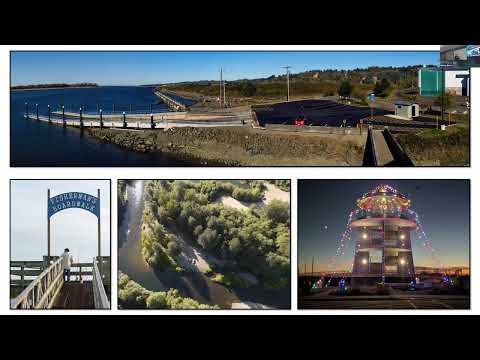
Dunlap described a separate, phased Westport Marina Modernization Plan to repair and reconfigure aging floating dock infrastructure that in places dates from the 1980s. “It is probably going to be a 50 to $60,000,000 project,” she said, adding that the work will take more than a decade and rely on multiple funding sources.
The port also highlighted other business‑park tenants, workforce trainings and tourism operations, including Friends Landing (an RV/tent camping facility) and Lynch Creek Farm’s occupancy of a large warehouse. Dunlap said AGP’s expansion is tied to rising demand for soybean oil as a renewable‑fuel feedstock and that growth in crush and meal production will increase export volumes at the port.
Asked whether federal grants or tariff actions could jeopardize projects, Dunlap said the port’s grant for the Terminal 4 work is already obligated and that reimbursements have started. “The short answer is no. Not at this time. Our grant was obligated,” she said, while adding there remains broader uncertainty around tariffs and trade policy the port continues to monitor.
The port has begun on‑site construction: Dunlap noted the Terminal 4 project broke ground in November and identified local contractors on the rail and dock scopes. She and council members emphasized the jobs impact: Dunlap cited a projection of roughly 55–60 long‑term full‑time jobs tied to the AGP facility and said longshore hiring will increase as export capacity ramps up.
Next steps: Dunlap encouraged residents to tour facilities and said the port will continue outreach to city, county and elected representatives as the phased projects move through permitting, funding and construction.