Get AI Briefings, Transcripts & Alerts on Local & National Government Meetings — Forever.
House approves referral sending two state questions to August ballot after heated debate over timing
Loading...
Summary
The House voted to refer two measures (judicial nominating commission reform and Medicaid expansion language) to an August special election via HB 4063; lawmakers raised concerns about low August turnout, bundling unrelated issues on one bill, and anticipated outside spending to influence the outcome.
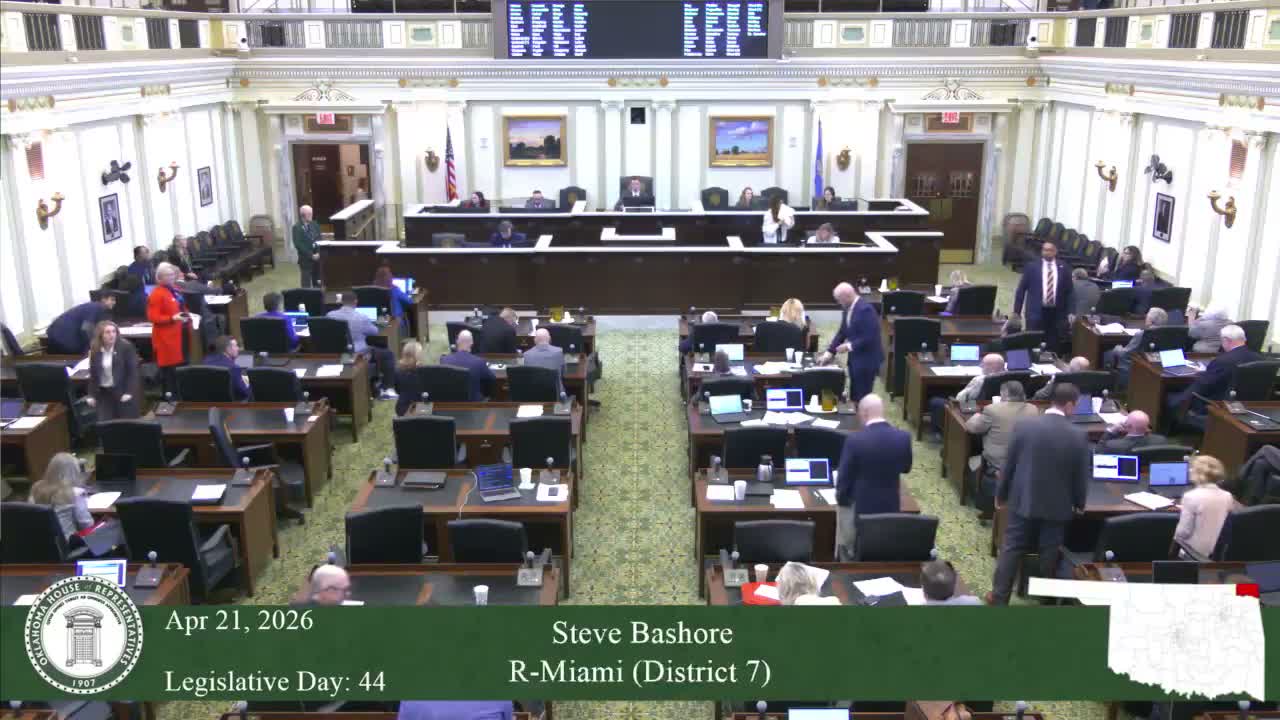
Chairman Trey Caldwell presented the joint committee report for HB 40-63, a referral bill directing two previously passed measures to an August special election: one would change parts of the judicial nominating commission and the other would place Medicaid expansion language before voters.
Caldwell said the decision reflected negotiations among the House, Senate and governor's office and that allowing Oklahomans to vote again was appropriate. "We wanna give Oklahomans a multitude of bite at the proverbial apple," he said, describing the timing as part of logistical agreements across branches.
Several members raised procedural and policy objections. Representative Fugate repeatedly pressed why the measures were set for August rather than June or November, citing concerns about lower turnout and the appearance that special timing could influence results. Representative LePak and others objected to placing two unrelated questions into the same referenda bill; Representative Schreiber called the single-bill approach "very unusual." Caldwell responded that legal counsel and outside scholars had advised that the August scheduling and combined placement were permissible and that the decision reduced administrative complexity.
Members also discussed outside spending: Caldwell referenced a lobbying organization he said had indicated it would spend $10 million to oppose the questions. Debate included questions about whether the governor would have leverage if the measures were referred to the ballot and about the higher vote thresholds required for emergency and veto-override procedures.
On final passage the House recorded 77 ayes and 17 nays; the chamber then voted to declare the bill's emergency provision passed by more than two-thirds, authorizing the special election provision to proceed as described in the bill.
What it means: The House's vote moves the two measures onto an August ballot, setting up a summer campaign season with likely substantial outside spending and continued political debate about turnout and tactic. Members who opposed the timing warned the choice of an August date could reduce participation and affect the results.