Get Full Government Meeting Transcripts, Videos, & Alerts Forever!
Get email alerts on the Land Use Variance topic
No spam. Unsubscribe anytime.
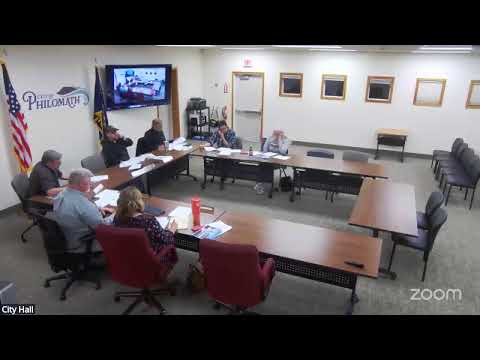
Philomath planning commission approves auto‑repair shop with 5‑foot greenbelt variance
Summary
The Planning Commission approved a 7,000‑sq‑ft auto repair facility at 134 South 10th Street, granting a variance to reduce the required 10‑foot street greenbelt to 5 feet and issuing a floodplain development permit; staff recommended approval with conditions.
The Philomath Planning Commission voted to approve a set of linked land‑use applications for a proposed auto‑repair facility at 134 South 10th Street, including site‑design review, a Class C variance to reduce the street greenbelt from 10 feet to 5 feet, and a floodplain development permit.
Planner Laura presented the staff report and said the three applications are linked: if the variance fails, the site‑design and floodplain permits cannot be approved. Staff described the project as an approximately 7,000‑square‑foot repair shop on a corner lot at Applegate and South 10th with angled parking to accommodate tow trucks and large pickup customers. Staff recommended approval with standard conditions but noted the commission must evaluate variance criteria, including whether the hardship is site‑specific and not self‑imposed.
In testimony the applicant, Joseph Noble, said the shop needs larger and angled stalls and deeper bays so vehicles do not spill into the public right‑of‑way. Noble said his business currently has four employees plus himself and that on‑site storage and circulation for deliveries are essential to operations.
Commissioners questioned parking geometry, a hashed parking stall that would have backed into the public right‑of‑way, the applicability of state law in public‑transportation corridors (which removes city minimum parking requirements but allows local dimensional standards), and an advisory comment from public works about possibly contaminated soils; staff said the applicant submitted a Phase I environmental study and conditions require notification and response if unexpected contamination is found.
Deliberation focused on whether the variance met the review criteria and whether the hardship was site‑specific or self‑imposed. Several commissioners cited the corridor’s pattern of nonconforming buildings and the city’s policy preference for storefronts closer to the sidewalk, while others raised concerns about preserving the greenbelt. After discussion the commission moved to approve the applications with the conditions listed in the staff report.
The motion to approve carried on a voice vote with all present commissioners recorded as voting in favor. The decision may be appealed to the City Council within 21 days.
The approval includes standard conditions: required pre‑construction submittals (civil plans for stormwater and parking), confirmation of final site details prior to building permit issuance, and installation of landscaping and required stormwater measures before occupancy.