Get Full Government Meeting Transcripts, Videos, & Alerts Forever!
Get email alerts on the Redistricting topic
No spam. Unsubscribe anytime.
Minority leader’s amendment to SB 5 fails after heated debate over redistricting rules
Summary
On March 12 in Annapolis the House rejected a minority-leader amendment to Senate Bill 5 that would have added congressional redistricting criteria to a constitutional special-election measure; proponents framed it as a fairness fix tied to a recent court opinion, opponents warned it raised single-subject and Voting Rights Act concerns.
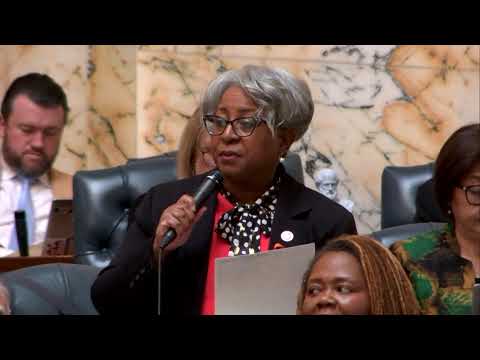
The Maryland House of Delegates on March 12 rejected a floor amendment to Senate Bill 5, a constitutional amendment creating a special-election process to fill General Assembly vacancies, after a lengthy floor debate over whether the change would expand the bill to address congressional redistricting.
The minority leader introduced the amendment, arguing it would require congressional maps to respect natural boundaries, geographic continuity, contiguity and communities of interest, and to avoid considering past voting behavior or party registration. He framed the proposal as restoring “one set of rules for everybody” and said it would correct what he called an attempt to nullify a trial-court ruling by Judge Battaglia. “If you don’t accept the amendment, you pass the bill presumably tomorrow with the amendment you’ve put in that nullifies Judge Battaglia’s opinion,” the minority leader said.
Supporters of the amendment said it would clarify ambiguous language in Article 3 of the Maryland Constitution and prevent mapmaking that uses partisan data to entrench outcomes. Opponents, including the floor leader and several committee chairs, said the amendment raised technical drafting problems and could violate federal obligations under the Voting Rights Act. The chair of the committee also argued the change was germane to selection of elected officials and said the committee’s process had allowed members ample opportunity to weigh in.
Delegates pressed several procedural points on the floor: some said the amendment had been circulated shortly before debate and that members lacked time for committee hearings on the change; others said the amendment would create a separate constitutional question that might sink the bill in the Senate or invite litigation under Maryland’s single-subject rule. After debate, the clerk called the roll and announced that the amendment failed; the clerk recorded 94 votes in the negative.
The clerk then printed the bill for third reading. The Senate special-election proposal remains on the chamber’s calendar; the failed floor amendment leaves intact the committee’s prior language as the bill advances toward third reading.