Get Full Government Meeting Transcripts, Videos, & Alerts Forever!
Get email alerts on the Economic Development topic
No spam. Unsubscribe anytime.
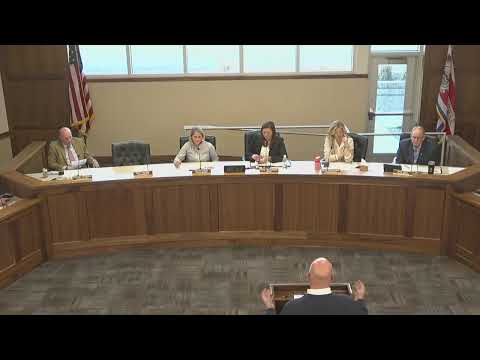
Bountiful council refines economic development purpose, stresses sales-tax growth and cautious use of city resources
Summary
At a March 24 work session, the Bountiful City Council reviewed a staff-drafted economic development purpose statement and guiding principles, focusing on protecting the existing sales-tax base, expanding taxable amenities, using RDA or city resources to spur private investment, and avoiding competition with local businesses.
City Manager Gary Hill presented a draft purpose statement and guiding principles at the Bountiful City Council March 24 work session and asked the council to confirm that the draft matched their priorities. "Economic development ensures the city has the stable and sufficient revenue needed to provide high quality public services," Hill read, adding that stronger local business activity "expands the range of businesses and amenities available to residents, enhances community vitality and livability, and supports the long term success of local businesses."
Council members endorsed the overall language but pressed staff to make two points clearer: that economic development is an ongoing, iterative process and that the city’s approach should protect the existing sales-tax base while pursuing measured growth. The mayor proposed explicitly adding wording about a regular audit-and-refresh approach so policies remain current rather than static. "I don't want it to feel like it's stayed and not gonna be something where we're constantly looking," the mayor said.
Council member Bell emphasized the fiscal trade-off at the heart of the discussion, framing the priority as maintaining high-quality city services while keeping taxes low. Bell asked whether the purpose statement should more explicitly note that the council aims to support services "without increasing taxes on residents," and other members agreed that sales-tax growth helps offset reliance on property taxes. "When we're talking about economic development, we're really talking about expanding our sales tax base," Hill said, noting that sales tax revenue reduces pressure to raise property taxes.
On guiding principles, staff suggested prioritizing Bountiful’s distinctive Main Street and using targeted city investments to attract private development. Council members discussed how to phrase the city’s role: rather than the staff term "leverage city resources," members preferred language like "deploying city resources" to describe using RDA or other funds for infrastructure, signage, sidewalks, or catalytic public amenities that encourage private-sector investment.
Hill cited recent work around the AlphaGraphics area as an example of how the city and adjacent properties were examined together to create more consistent, vibrant Main Street uses. "When the opportunity became available, we decided to take that and adjacent properties and see if we can find a use for Main Street that's more consistent and more vibrant than what currently existed," he said.
Members also debated a guiding principle that the city should avoid competing with the private sector. One council member asked where the line should fall between acting as a catalyst (providing seed investments or infrastructure) and directly competing with local businesses. "When are you a catalyst to a first mover, and when are you a competitor to business?" the mayor asked. Council and staff agreed this distinction requires further discussion in future sessions.
The council did not take any formal votes during the work session. Members agreed to continue refining the purpose statement and guiding principles in subsequent work sessions and to move from principles to identifying specific focus areas and strategies once wording is settled. Staff will return with refined language and next steps for council review.