Get Full Government Meeting Transcripts, Videos, & Alerts Forever!
Get email alerts on the Transportation topic
No spam. Unsubscribe anytime.
Council approves Inland Rail Trail feasibility recommendations, seeks grant‑ready design
Summary
The council approved recommendations from a Caltrans‑funded feasibility study for the final 7‑mile Inland Rail Trail segment in Oceanside, directing staff to pursue grant‑ready alignments and phased construction; the study cost about $500,000 and emphasized outreach and low‑stress design.
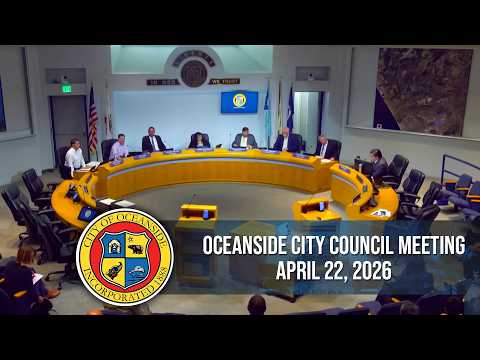
The Oceanside City Council on April 22 voted 5–0 to approve recommendations from the Inland Rail Trail feasibility study that outline a conceptual alignment for the city’s final seven‑mile segment of a proposed 21‑mile regional trail.
Luis Cardenas, an associate engineer in the city’s engineering division, said the study — funded by a Caltrans planning grant and local matching funds totaling about $500,000 — proposed an alignment largely within North County Transit District right‑of‑way to provide a low‑stress trail connecting Sprinter stations, business and medical centers, and neighborhoods. Cardenas said the study included three rounds of outreach, pop‑ups, an in‑person workshop, mailed postcards to nearby residences and materials in English and Spanish.
Deputy Mayor Eric Joyce and other council members praised the outreach and asked about funding strategies and phasing. Cardenas said staff will pursue regional grant opportunities, including SANDAG programs, and that breaking the project into eight construction segments could allow the city to build lower‑impact or lower‑cost portions first.
Council member Jimmy Figueroa asked whether the trail would follow the rail or run adjacent to Oceanside Boulevard; Cardenas said outreach favored a route adjacent to rail to reduce interactions with vehicle traffic and provide a low‑stress experience for users. Council member Peter Weiss moved approval, which passed unanimously.
What’s next: staff will pursue grants and continue final design work, with a focus on environmental permits, funding packages and a phased construction approach.