Get Full Government Meeting Transcripts, Videos, & Alerts Forever!
Get email alerts on the Senior Program topic
No spam. Unsubscribe anytime.
Hubbardston assessors seek clarity on senior tax work-off program administration and eligibility
Summary
Assessors at the April 22 meeting discussed confusion among residents about changes to the senior tax work-off program, clarified that administration is handled outside the assessors' office (typically by the treasurer/collector), noted eligibility as age 60 and income $60,000 or less (per clerk), and committed staff to follow up with the treasurer/administration.
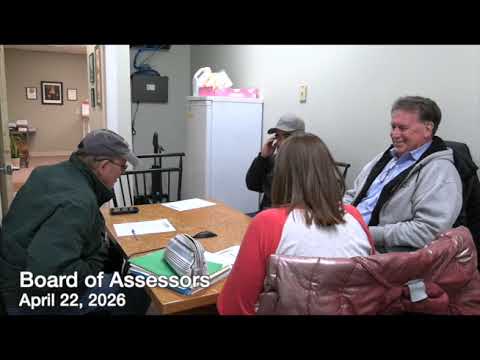
Members of the Hubbardston Board of Assessors spent a substantial portion of their April 22, 2026 meeting addressing constituent questions about the senior tax work-off program and who manages it.
A board member opened the topic saying residents had asked for clarification about changes to income thresholds and stipends and that the assessors had not been notified of recent rule changes. The Committee member said he had never handled the program in his other towns and told the board: "It goes through the treasurer collector's department 9 out of 10 times." The Clerk confirmed she had been handling the program this year only because staff turnover required someone to step in and said, "it is not within the realm of the assessors to track their hours," explaining that the treasurer/collector calculates the tax credit applied to quarter 3 and 4 property tax bills rather than issuing a direct check.
The Clerk described eligibility and administrative procedure as she understood them: applicants must be age 60 or older and have annual income of $60,000 or less; the program is limited to 10 participants who are accepted on a first-come, first-served basis, and departments where seniors work (senior center, clerk's office, library, parks) verify hours through a departmental sign-off sheet. "They have to have, I think, $60,000 or less per year income... and they have to be 60 years old or older," the Clerk said on the record.
Board members discussed reported pay and tax effects: staff described applicants being paid an hourly stipend (examples of $15 per hour were discussed) and emphasized that payment is applied as an exemption to property tax bills rather than treated as an off-the-record cash payment. One participant raised a rough arithmetic example suggesting a potential "$1,500 off taxes per person" figure, and participants noted that because income is reported and taxes apply differently the net tax effect may not equal the gross stipend amount.
The board agreed that the assessors' office should not perform application intake or hour tracking as a routine function and that residents with questions should be directed to the treasurer/administration. The Clerk said she would inquire with the treasurer/administration about current program rules and report back to the board at a future meeting. In the interim she asked that residents with questions be directed to her for assistance.
The discussion ended with members reiterating they would not take over program management and that the Clerk would follow up and return with clarifications about eligibility, hours, payment calculations and any procedural changes.