Get AI Briefings, Transcripts & Alerts on Local & National Government Meetings — Forever.
Delaware Senate committee hears sharply divided testimony on bill to require PLAs for school construction
Loading...
Summary
Lawmakers and scores of public commenters spent hours debating Senate Bill 2 72, which would require project labor agreements on school construction and renovation projects costing $1,000,000 or more after Dec. 31, 2026; proponents said PLAs protect workers and improve delivery, while opponents warned of higher costs, less competition and likely legal challenges. The committee took testimony but did not vote.
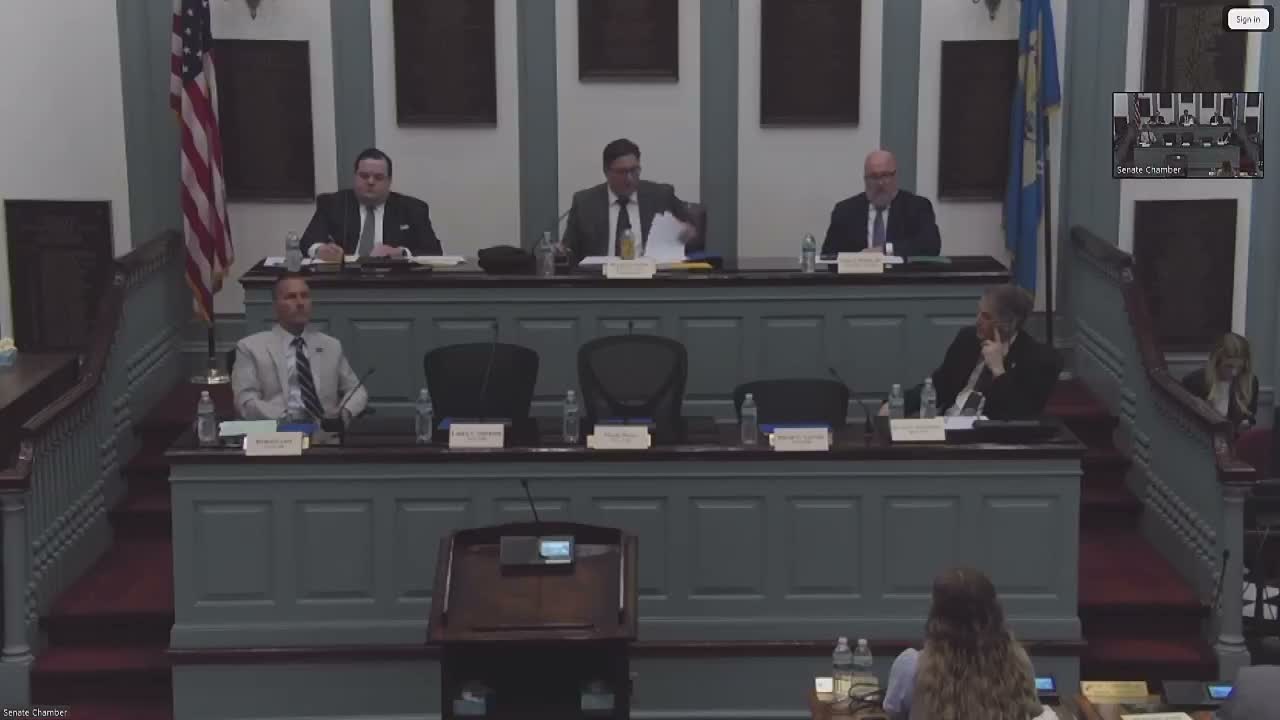
DOVER — The Delaware Senate Labor Committee on Tuesday heard hours of testimony on Senate Bill 2 72, a measure from Sen. Walsh that would require project labor agreements (PLAs) on school construction and renovation projects that cost $1,000,000 or more and are executed after Dec. 31, 2026. Senators heard legal experts, contractors, school officials and dozens of public commenters on both sides of the issue.
Senator Robert Walsh, the bill sponsor, told the committee SB 2 72 narrows PLA requirements to school projects and is intended to ensure “efficient, quality, and timely work” while protecting taxpayer dollars and guaranteeing worker wages, benefits and safety. “PLAs will guarantee that these projects use a highly skilled workforce,” Walsh said, and he described an amendment he plans to file to clarify that a PLA would be triggered only when there are at least two bids per craft, including union bids.
Supporters, including union leaders and trade representatives, told the committee PLAs create structure for scheduling and dispute resolution, support apprenticeship pipelines and guard against wage theft and misclassification. Ray Heinemann, a labor attorney with long experience in Mid‑Atlantic PLA work, said PLAs are “self‑enforcing” through arbitration and that federal precedent and the market‑participant doctrine allow public entities to require PLAs for projects they fund. “You get higher training, higher efficiency, less delays, less change orders,” Heinemann said.
Opponents, including the Associated Builders and Contractors of Delaware and dozens of merit‑shop contractors, argued the bill would reduce competition, raise construction costs and exclude many local businesses and workers. Steven Julian of the Associated Builders and Contractors said studies such as one from the Beacon Hill Institute showed PLAs sometimes increased costs by 10–30 percent and criticized language in SB 2 72 that says contractors “may” retain a portion of their workforce under a PLA rather than guaranteeing it. “This bill has a lot of ambiguity,” Julian said, calling for measurable, enforceable provisions instead of permissive language.
Several witnesses raised specific legal and constitutional concerns. Anthony Delcola, minority caucus counsel testifying remotely, warned the committee that blanket PLA mandates across a category of work risk federal preemption under decisions such as Boston Harbor, and he urged a more limited, market‑participant approach. Kevin Fasig, an attorney who testified remotely, said he had not seen a convincing legal argument to counter that concern.
Local school officials and vocational‑technical leaders said they are worried about practical effects. Susan Brown, executive director of the Delaware Association of School Administrators, urged amendments that protect students and limit administrative burdens and potential project delays. Superintendents representing vocational districts warned that restricting merit‑shop participation could harm co‑op placements and registered apprenticeship pipelines that feed local employers.
Public comment filled most of the hearing, with union members and trade councils urging passage and hundreds of merit‑shop contractors and minority‑owned businesses urging rejection. Rob Testa, speaking for pro‑PLA interests, said the measure defends workers and taxpayers; several minority‑business advocates said the bill would lock out local Latino and Black contractors and called the 60/40 or similar provisions ‘‘a wall blocking participation.’’ Carmen Robledo, a Latina contractor, warned that mandated PLAs would prompt many local firms to stop bidding and allow out‑of‑state firms to dominate state projects.
The committee did not take a formal vote on SB 2 72. Chair Senator Townsend concluded the hearing after Walsh’s closing remarks and public testimony, saying the committee would adjourn. No date was set on the record for further committee action.
What’s next: The sponsor said he would file an amendment to clarify the bid trigger and DBE participation language; committee staff and members also flagged possible constitutional questions that, if unresolved, could invite litigation should the measure advance. The committee adjourned without a final decision.