Get Full Government Meeting Transcripts, Videos, & Alerts Forever!
Get email alerts on the Utilities Rates topic
No spam. Unsubscribe anytime.
Lompoc staff propose one-year winter averaging for wastewater billing; public hearing set for July 21
Summary
City staff proposed replacing a four-year winter averaging method with a one-year calculation for wastewater charges and scheduled a Prop 218 notice and public hearing for July 21; staff said about 40% of customers could see increases from preliminary winter reads and that the change would reduce manual billing work.
City staff on April 21 proposed changing Lompoc's wastewater winter-averaging method from a four-year rolling average to a one-year (prior winter) average and asked the council to authorize Prop 218 notice and a public hearing on July 21.
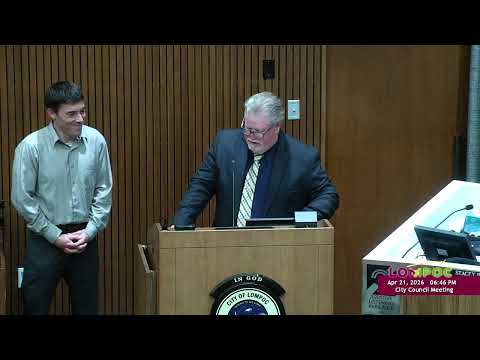
Interim management service director Robert Cross (speaker 13) described the current four-year manual process used to calculate winter averages and said the city's billing system can automate a one-year average. "Our current accounting system can't manage that; it's a manual process for changing all the accounts," Cross said. He told council staff had reviewed early January and February reads and estimated about 40% of customers would see an increase compared with their four-year averages.
Cross said the change would simplify billing, allow usage changes to affect bills more quickly, and would be subject to a public protest process under Prop 218. "If 50% of customers protest, we cannot implement the change; if less than 50% protest, we'll return for final approval after the hearing," he said.
Council members and residents asked about the distributional impact and bond-rating implications. Cross said the wastewater bond rating has been downgraded recently because revenues have not exceeded expenses, which makes analyzing rate and averaging methods timely. Council discussed customer notification, leak adjustments, and the potential effect on large commercial accounts that skew averages.
The council approved sending Prop 218 notices and set the public hearing for July 21, 2026; if adopted after the hearing, the method would take effect 30 days later.