Get Full Government Meeting Transcripts, Videos, & Alerts Forever!
Get email alerts on the Saws Board Interviews topic
No spam. Unsubscribe anytime.
San Antonio council interviews seven finalists for SAWS board as residents raise aquifer and transparency concerns
Summary
The City Council interviewed seven finalists for three San Antonio Water System board seats on Sept. 4, 2025, focusing on infrastructure, leak reduction and conservation. Public commenters pressed the council on development in Edwards Aquifer recharge zones and raised questions about the ad hoc shortlisting process.
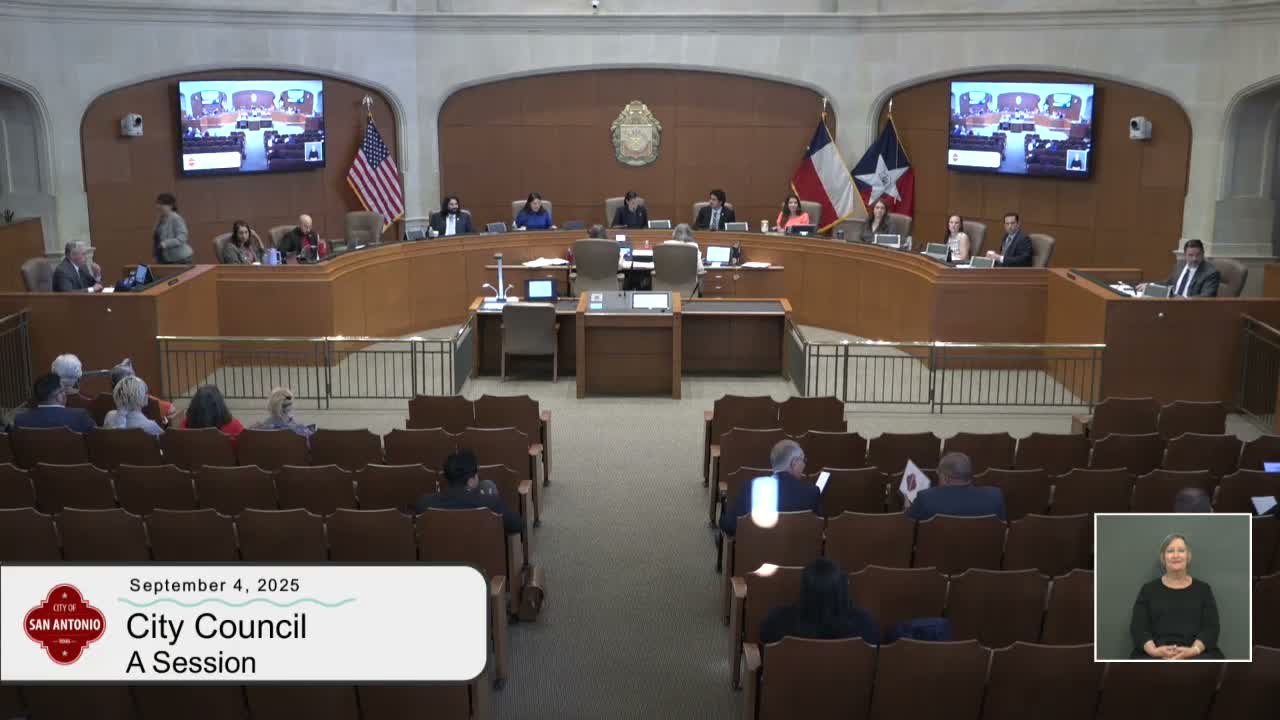
San Antonio’s City Council spent much of its Sept. 4 meeting interviewing seven finalists for three open seats on the San Antonio Water System (SAWS) board, pressing candidates on how they would address aging pipes, large system water loss and the balance between innovation and affordability.
The interviews—conducted after a brief public-comment period—were introduced by City Clerk Debbie Rokasitter, who said 30 applications were received and an ad hoc committee appointed by Mayor Gina Ortiz Jones short‑listed seven candidates for interviews. Mayor Gina Ortiz Jones said the board will need members who “can think equally about cost, conservation, climate change as well as capital infrastructure projects.”
Why it matters: SAWS is facing decisions about major capital investments and programs to reduce nonrevenue water (leaks and other losses), expand supply diversity and keep rates affordable. Council signaled it would deliberate in executive session before any appointments; the meeting recessed for executive session and reconvened with no official action recorded.
Candidates and key themes
Mr. Wurzburg, an attorney who said he advises hospitals and health systems, emphasized investment in infrastructure and conservation. He cited the scale of the problem, saying “about 20% of our water” is nonrevenue water and that even small percentage gains could save millions of gallons. He told council he would bring legal and governance experience and reiterated a focus on balancing innovation with ratepayer impacts.
Greg Mann, who identified himself as a longtime local real‑estate and finance professional, made leakage his central point, telling council that water loss is “almost 17,000,000,000 gallons annually” and called for transparency and prioritization of capital projects to reduce leakage quickly.
Dr. Jeremy Roberts, who described a background in technology and as chair of SAWS committees, said the utility must both diversify supply and manage demand. “We could face shortfalls after 2035 if we do not act now,” he told the council, arguing that aggressive leak detection, infrastructure upgrades and measured technology adoption could delay costlier new supplies.
Other finalists raised similar priorities: Dr. Cora Rayo Garza urged data‑driven planning tied to demographic trends; Teresa Rodriguez Sapanski framed water as a public‑health and equity issue and emphasized cybersecurity and fiscal stewardship; Blake (surname variably recorded in the transcript) spoke to engineering and supplier‑relations experience and supported technology plus preventative maintenance; and Dr. Adriana Rocha Garcia, a former council member, highlighted sustainability, succession planning, PFAS risks and cost overruns on large projects as reasons for careful oversight.
Public comment and transparency concerns
Before interviews began, two members of the public urged scrutiny of development and of the selection process. Eugenio Rodriguez asked whether proposed development would affect Edwards Aquifer recharge areas. Jack Finger told the council he was concerned about transparency in the ad hoc shortlisting process and alleged a potential conflict involving an applicant, saying, “She did advocate for its taxpayer funding, last year as a city council person just months before she became its CEO. To me, that sounds like a conflict of interest.” The allegation was made from the public podium and was not addressed in detail during the session; no response by the named applicant was recorded in the transcript.
What council members pressed on
Council members repeatedly asked candidates how they would reduce water loss, improve coordination between SAWS and city departments, and ensure capital projects run on time and on budget. Multiple candidates pointed to technology—advanced leak detection, smart metering and data analytics—but emphasized that innovation must be paired with fiscal discipline and clear performance metrics.
What the meeting did (and did not) decide
The council recessed into executive session to deliberate under the Texas Government Code (sections cited in the meeting), and when it reconvened no official appointments or votes on SAWS board members were recorded in the public minutes. The SAWS appointments—if made—would take effect Sept. 10, 2025, for terms through May 31, 2029, but the meeting did not report final votes on Sept. 4.
Next steps
Council members will deliberate in executive session and may return later in the meeting or at a subsequent meeting to move and vote on appointments. City staff said shortlisted finalists were notified and the clerk will provide onboarding information to any appointees, including financial‑disclosure filings and Municipal Leadership Institute training.