Get Full Government Meeting Transcripts, Videos, & Alerts Forever!
Get email alerts on the Municipal Budget Levy topic
No spam. Unsubscribe anytime.
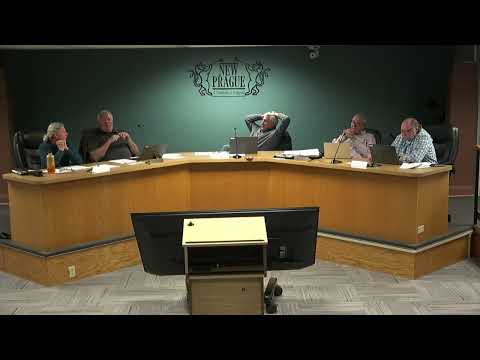
New Prague council advances $5.6 million proposed levy after debate over $100,000 earmark
Summary
City staff presented a proposed levy of $5,603,735 (5.46% increase) and said the average residential owner would see an estimated 4.15% city‑portion tax rise; council debated whether to use a $100,000 general‑fund earmark now to lower next year’s levy and scheduled a Truth in Taxation hearing for Dec. 1 at 6 p.m.
The New Prague City Council advanced a proposed 2026 property tax levy of $5,603,735 — a 5.46% increase over the prior year — after a nearly hour‑long discussion about whether to use a $100,000 general‑fund earmark now to blunt next year’s levy spike.
City staff member Josh said the proposed levy would produce an estimated city‑portion tax impact on an average residential property owner of about 4.15%. He told the council the $100,000 that had previously been listed under ‘government buildings’ in capital projects was moved to a debt‑service/capital projects fund to “more clearly indicate what that money would be for,” while remaining flexible for use on a police station debt payment, city‑hall maintenance, or another capital need.
Several council members pushed for using the $100,000 this year to reduce the immediate taxpayer impact. “I would like to use this $100,000 to lower that tax levy from 5.46% to 3.46%,” one council member said, urging the council to bring the levy closer to the recent inflation rate. Supporters said applying the cash now would soften the levy spike homeowners will see and was consistent with rate‑stabilization thinking.
Other members and staff cautioned that the funds had been discussed and set aside over multiple budget cycles as a facilities earmark and that keeping the money available would help smooth larger, known capital costs tied to aging city hall. Josh said the earmarked amount sits in the general fund as an assigned balance and that moving it into debt service was principally an accounting clarification; he noted the council retains discretion over final use.
The group also reviewed contingency treatment for the recent police bond financing: part of the contingency had been expected to be self‑funded from cash on hand, and the first interest payment was planned to be paid from cash rather than levied. Staff reported the debt‑service fund balance at year‑end 2024 in the transcript as roughly $313,000 and said adding the $100,000 would bring it to the low‑$400,000 range; accounting staff were asked to confirm exact, current figures.
Members repeatedly emphasized the role of changing property valuations: Josh explained county valuation changes — Scott County and Le Sueur County numbers were used — drive substantial variation in who sees larger or smaller tax changes, and that some homeowners could see increases materially above the city average depending on valuation shifts.
After discussion, the chair directed staff to bring the budget forward as discussed for the Truth in Taxation hearing at 6:00 p.m. on Dec. 1. The meeting record shows preliminary consensus to proceed with the proposed levy as presented; final budget and levy approvals will occur at the council’s Dec. 15 meeting.
At the start of the special meeting the council voted to approve the meeting agenda (motion passed 5–0). The meeting ended after a motion to adjourn was seconded by Rick Steyer and approved by voice vote.