Get Full Government Meeting Transcripts, Videos, & Alerts Forever!
Get email alerts on the Instructional Support Restructuring topic
No spam. Unsubscribe anytime.
Teachers and parents urge pause on district plan to combine RTI and ELD coaching roles
Summary
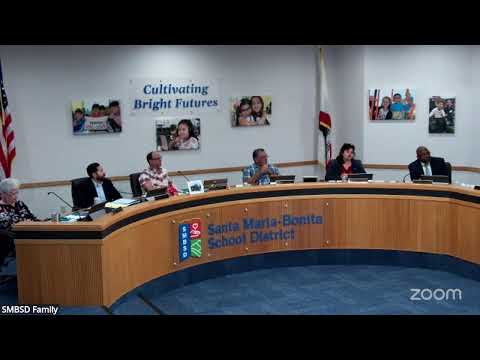
At a Santa Maria‑Bonita School District board meeting, dozens of teachers, coaches and parents urged the board to pause a proposal to consolidate instructional coach, ELD coach and RTI teacher roles into a site coach and academic support teacher model, saying the change risks weakening tier‑3 interventions and was announced without adequate consultation.
Dozens of teachers, parents and student leaders told the Santa Maria‑Bonita School District board on Wednesday that a planned consolidation of RTI and ELD coaching positions could harm the district’s most vulnerable students and was rolled out without adequate consultation.
At a first reading of the proposed site coach and academic support teacher job descriptions, district leaders said the change is intended to align support to school‑level need, increase focus on language development and free teachers from administrative tasks so more adults can work directly with students. "Our intention was never to be disrespectful," a district leader said, adding the district had engaged sites and revised language after feedback.
But staff and union representatives who spoke during an extended public‑comment period described a different experience. Jennifer Danowitz, instructional coach at Arianez Junior High, said coaches and RTI teachers were "blindsided" by Zoom notifications issued before Thanksgiving break and have not had a meaningful role in shaping the new descriptions. "This does not uphold the values of this district," she said.
Multiple speakers pressed the board to preserve tier‑3 intervention — the intensive, small‑group instruction used to identify and support students with significant needs. Amy Burns, an RTI teacher at Bonita Elementary, told the board that eliminating or diluting tier‑3 services "during a literacy crisis will widen gaps." Mario Mendoza, a special‑education teacher, said reliance on staffing agencies has already undermined continuity for students who require stable adult support.
District presenters said the new model would continue to include tier‑3 services and that the district seeks a "variance model" that combines some tier‑2 and tier‑3 support to reduce long waitlists for interventions. They proposed using site‑level metrics — such as numbers of English learners, newcomers, students who score at risk on early screening tools and those with low SBAC results — to allocate whole‑person positions proportionally across schools each year. "The intent is to provide support proportional to the need," a district leader said.
Board members asked detailed questions about implementation, including whether itinerant staff would be assigned to sites for a full year, how seniority and reapplication processes would work, and whether ASTs could be protected from being pulled for substitute coverage. District leaders acknowledged the concerns and said further work with human resources and labor partners is required before a second reading.
Several public commenters urged the board to pause the rollout until that work is complete. Kristen Lohr, president of the district’s certificated union chapter, asked the board to remove the first reading from the next agenda until a documented, inclusive consultation process is finished. "This is not a small oversight; it’s a significant departure from both legal expectations and our district’s own stated beliefs," she said.
The board acknowledged the first reading and did not vote on the job descriptions. District leaders said committee work to finalize staffing metrics and implementation details will continue and that revised language and clarifications will be brought back before the board. "Implementation is going to be where the real work begins," a district official said.
The discussion followed a meeting that included student presentations, the acceptance of the district’s 2024–25 audit with an unmodified opinion, approval of the first interim budget certification for 2025–26, and votes to approve expanded‑learning contracts with Children’s Creative Project, the Santa Maria Valley YMCA and Boys & Girls Club of Mid Central Coast. The board also elected officers for the coming year.
What’s next: the job descriptions return for subsequent board consideration after additional engagement with staff, HR and union partners, and after the district produces the site‑need metrics it says will guide staffing allocations.