Get Full Government Meeting Transcripts, Videos, & Alerts Forever!
Get email alerts on the Assessment topic
No spam. Unsubscribe anytime.
PVPUSD reports strong CAASPP results; board presses for site-level interventions
Summary
At its Oct. 22 meeting the Palos Verdes Peninsula Unified board reviewed 2025 CAASPP results showing district performance well above state averages and asked staff for site-level plans, subgroup analysis and earlier screening to address dips in some grades.
Dr. Wildey, presenting the district’s 2025 CAASPP report, told the Palos Verdes Peninsula Unified School District Board that CAASPP ‘‘is just 1 and only 1 indicator of student achievement’’ and walked trustees through grade-by-grade results showing that the district remains well above state averages in both English language arts and math.
The presentation showed overall district rates of about 81% of students meeting or exceeding standards in ELA (compared with roughly 49% statewide) and approximately 75% in math (versus about 38% statewide). Dr. Wildey said the district ranks among the highest-performing K–12 districts in California and that ‘‘maintaining this level of excellence is still something we're really proud of’’ while acknowledging there are small dips at particular grade levels and sites.
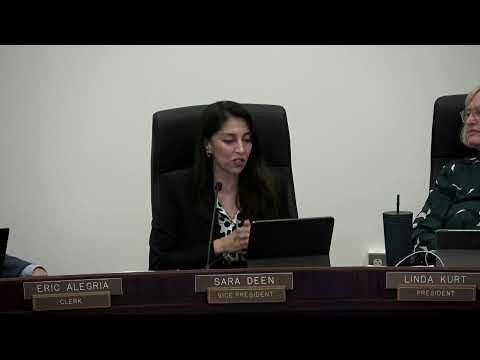
Board members pressed staff for specifics about where scores dipped and what the district will do next. Board member Eric Allegria asked what more the board can do to support schools ‘‘from a board perspective,’’ and trustees requested regular follow-ups. Dr. Wildey described the district’s approach to targeted supports — site data chats, RTI (response-to-intervention) teachers pushing into classrooms, expanded professional development and a new K–2 reading processing screener already deployed this fall to catch reading processing issues earlier.
The presentation highlighted Point Vicente’s gains in third grade, which Dr. Wildey credited to ‘‘intentional differentiation, small group instruction, and hands-on learning’’ that the site’s leader modeled in teacher practice. Trustees asked that staff consolidate examples of those site practices into a short update so other principals can replicate effective strategies.
Board members also asked for subgroup breakdowns and cohort tracking. Trustees flagged transitions (elementary-to-intermediate and intermediate-to-high school) as points where students can fall through gaps; Dr. Wildey said the district holds fifth-to-sixth grade transition meetings, maintains watch lists, and will share names with receiving schools as part of its ‘‘data chats’’ process to reduce information loss. On screening and intervention logistics, Dr. Wildey said the district has begun expanding its science-of-reading training into third and fifth grades and that the district replaced i-Ready with IXL this year to track mastery and guide instruction.
Trustees asked for a concise, site-by-site intervention status to be included in upcoming Friday updates and in a future board packet. The superintendent reminded the board that the statewide California School Dashboard will be updated on Nov. 13 with 2024–25 data, which staff said will provide additional growth indicators for district review.
Next steps: staff will provide site-level intervention summaries and subgroup analyses, continue rollout of early screening and RTI supports, and follow up after the dashboard update.