Get AI Briefings, Transcripts & Alerts on Local & National Government Meetings — Forever.
Metro Health says SA Kids Breathe program improves pediatric asthma control; reports budget and outcomes
Loading...
Summary
Metro Health presented SA Kids Breathe, a home-based asthma program with an $827,702 annual budget and eight staff; the program served 181 children in FY25 and 116 so far in FY26 and reported a rise in average ACT scores from 16.6 at enrollment to 22.8 at 12 months.
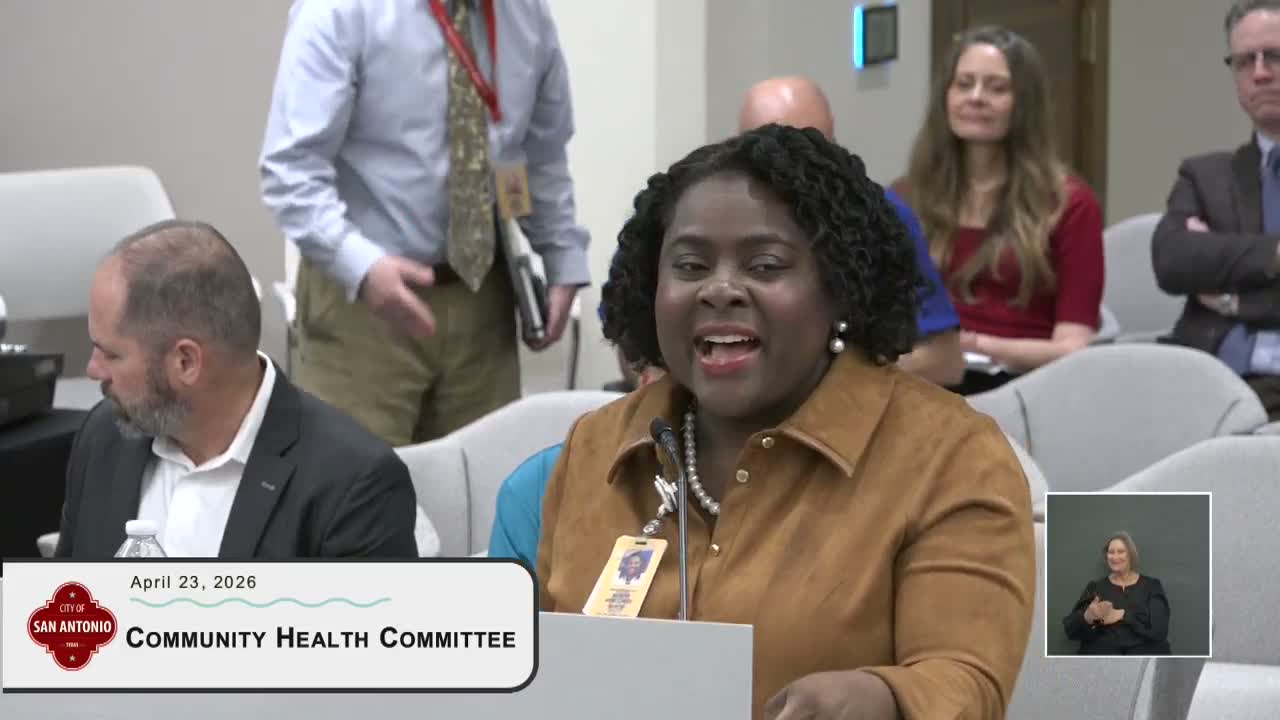
Metro Health on April 23 briefed the Community Health Committee on SA Kids Breathe, a home-based intervention for children with asthma that aims to reduce hospitalizations and school absenteeism and improve symptom control.
"Our program has a staffing complement of 8 and an annual budget of $827,702," Marjorie White, assistant director for the Community Health and Safety Division, told the committee. White described the program’s five goals: keep kids out of the hospital, keep kids in school and active, keep parents at work, save families and health-care systems money, and reduce tobacco use and exposure.
Enrollment criteria are clinical and school-based: examples include one hospitalization in the past year, two or more urgent-care or emergency visits in the past year, two or more steroid bursts in the past year, two or more unscheduled school treatments in the past week, or missing 10% or more of school days in the past year. Referral sources include caregivers, health-care providers and schools.
White presented outcomes for participants: the program’s average asthma-control test (ACT) score rose from 16.6 at enrollment (poorly controlled) to 21.4 by the third home visit and 22.8 at the 12-month follow-up. That represents a 37% increase in well-controlled asthma from enrollment to 12 months, and staff reported that 89% of graduates were well controlled at the 12-month visit.
Services include three in-person home visits during the program’s first three months (with virtual options), follow-ups at six and 12 months, education on inhaler technique and an asthma action plan, home assessments and toolkits (cleaning kits, medicine boxes, pest-management kits) and referrals to social services. Metro Health said the program is no cost to participants and receives referrals from clinics, schools and community partners.
White highlighted partnerships with the South Texas Asthma Coalition, UT Health San Antonio Medical School, University Health, Community First Health Plans, the Texas Department of State Health Services, Parks and Recreation, the Department of Human Services, Neighborhood Housing, AmeriCorps and the CDC public-health associate program.
A staff-funded full-time position will be added to increase referrals and retention, White said, and staff will continue to promote smoke-free living and tobacco-cessation referrals. Committee members thanked the team and asked for limited follow-up details to be provided offline because of time constraints.