Get AI Briefings, Transcripts & Alerts on Local & National Government Meetings — Forever.
Neptune Township Board approves routine agenda items as residents press for audit, consolidation and budget cuts
Summary
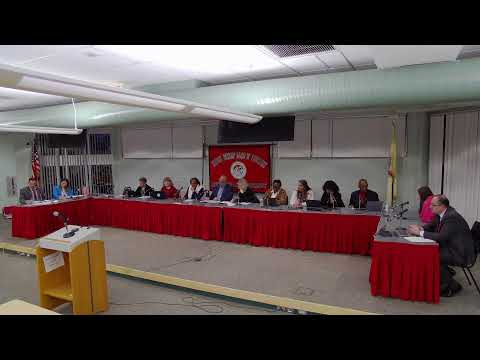
The Neptune Township Board of Education approved the superintendent's report and a string of finance, transportation and personnel items while receiving extended public comment in which residents disputed performance figures, urged school consolidation and demanded an independent audit of district finances.
The Neptune Township Board of Education approved the superintendent's report and multiple finance, transportation and personnel items at a public meeting that also featured an extended public-comment period dominated by concerns about the tentative budget, rising property-tax bills and low test scores.
During a presentation before the public-comment period, business administrator Mr. Carabello told the board that the district’s state aid notice included roughly $529,005 in additional aid, a roughly $25,000 reduction in preschool education aid, and an increase in mandated charter-school tuition obligations of about $1,248,696. He said those shifts, along with other factors, produced a net budgetary challenge that the tentative 2026–2027 budget addresses by proposing a 2% tax-levy increase and $1.9 million in reductions from the prior year. Carabello said the tentative budget will go to Monmouth County for review and return for the board’s public hearing and adoption on April 29.
The meeting’s public-comment period included more than two dozen speakers who alternately defended the district’s students and staff and urged the board to make deeper cuts, consolidate underused facilities and commission an independent audit. ‘‘Neptune is not failing,’’ said Tracy Walsh, a longtime Neptune teacher who highlighted successful alumni and asked the public to consider the district’s strengths as well as its challenges. ‘‘Greatness and success are what fill our buildings year after year,’’ she said.
Other residents disputed that characterization and pressed for fiscal action. ‘‘You have a per-student cost north of $28,000,’’ said Matt Regiro, who urged personnel reductions to rein in spending. Several speakers called out administrative costs and cited varying figures for graduation and proficiency rates; Kathy Benjamin, a middle-school teacher and lifelong resident, said the district’s June 2025 graduation rate was 87%, a figure she said some critics misstated. Ed Cooper and others cited low math proficiency and questioned whether administrative spending was producing results.
Multiple commentators, including a representative of Public Academy No. 1 and members of local taxpayer groups, said they had filed a complaint with the state controller and demanded an independent audit, a rightsizing/closure plan for underutilized buildings and the possibility of a voter referendum. Speakers suggested options such as shared superintendents or regional health-care purchasing consortia to reduce costs; others urged stricter attendance enforcement.
Board business moved forward amid the public comments. The board voted to approve the superintendent’s report items 1–7 and to carry a set of finance items and other routine agenda sections including transportation, special education, student activities, personnel and negotiations. During the finance vote there was public and board discussion about the budget portion: a board member stated she intended to vote no and asked for reconsideration, though the roll call recorded 'Aye' votes from listed members at the time.
The board closed the meeting after brief announcements about upcoming school events. The tentative 2026–2027 budget now proceeds to the county review stage, with a public hearing and final adoption scheduled to follow per the district’s stated timeline.
What’s next: the district’s tentative budget will be reviewed by the county; the board has scheduled a public hearing and adoption vote for April 29, per the business administrator’s remarks.