Get Full Government Meeting Transcripts, Videos, & Alerts Forever!
Get email alerts on the Budget topic
No spam. Unsubscribe anytime.
Lodi Board approves preliminary budget with 4.5% tax-levy increase after debate and public comment
Summary
The Lodi Board of Education approved preliminary budget items FB1–FB3 by majority vote, endorsing a 4.5% proposed tax levy after administrators cited a 30% jump in health-benefit costs and roughly $1.2 million in reduced state aid. Trustees and residents debated capital projects, health-plan options and special-education costs.
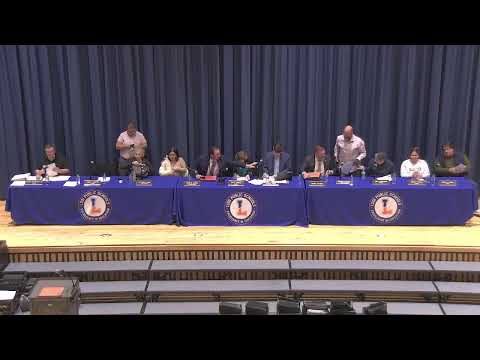
The Lodi Board of Education voted to approve preliminary budget items FB1 through FB3 on March 25, endorsing a proposed 4.5% increase in the tax levy for the 2026–27 school year after extended discussion and public comment.
Superintendent D'Amico framed the district's decision, saying health benefit costs "have increased by more than 30%, an impact which adds $2,600,000 to our budgeted expenditures," and noting a roughly $1,200,000 reduction in state aid. "Together, these 2 factors have created a significant challenge for the district," he said, and described a revised proposal that lowers an earlier 5.5% levy recommendation to 4.5% while trimming spending lines.
The administration also removed an athletic-field replacement from the budget presented that evening, saying the project would rely on safety testing and could be funded from capital reserve if needed. "This is about student safety and risk management and not about enhancement or luxury," D'Amico said, noting that any capital-reserve withdrawal would not impact the levy if used only for eligible capital improvements.
Residents who spoke during the agenda and nonagenda public-comment periods highlighted different concerns. Resident Laura Castellano urged the board to "review insurance and benefit costs each year" and explore joint insurance funds or private plans to limit future increases. Another resident, Glenn Murphy, urged the board to "think outside the box" about corporate partnerships and suggested broader planning for stadium upgrades to serve multiple sports.
Board members pressed administration for line-by-line clarity before the vote. Business administrator Lam detailed the revenue-side pressures: a state aid reduction of about $1.2 million and a $600,000 reduction in budgeted fund balance, along with nearly $2.7 million in benefit increases and more than $1 million in contractual salary steps. Lam said the district has examined alternatives to the state health plan but that, based on the district's claims experience (over 120%), switching providers or plan types was not cost-effective for the coming year.
Trustees debated the scope of a $4.5 million capital figure that had at times included field replacement, HVAC work and snack-stand upgrades. Administrators said some items were removed from the package and that bid alternates would be considered if field bids proved favorable. Trustee Mastrofilippo repeatedly requested more complete line-item documentation, noting week-to-week changes and asking for the 128-page detailed budget booklet the district has provided historically.
When the board took roll-call votes on FB1–FB3, the result carried. Recorded votes showed six trustees in favor and two opposed on FB1, with one trustee abstaining on FB2 and FB3; the motion therefore passed. The clerk recorded these individual responses: Alcala (yes), Cannizzaro (yes), LaFranca (yes), Mastrofilippo (no on FB1; abstain on FB2 & FB3), Ramos (no on all three), Thomas (yes), Sima (yes), Cardone (yes). A member listed as not present was recorded as absent for the vote.
During nonagenda public comment, resident Omar Lopez urged the board to use its public platform to advocate for greater state support and criticized language that framed special-education students as a "burden." Lam and several trustees reiterated that the district's special-education counts and associated costs are driven by student need and state placements; trustees emphasized they would not support personnel cuts that affect classroom teachers.
The board chair closed the meeting after brief board comments emphasizing fiscal caution and staff protections. Next steps: the administration will forward the preliminary budget to the county superintendent's office by the March 26 deadline; if a budget were to fail at the local level, D'Amico warned, the county and state could intervene and recommend funding levels that might require larger tax increases than the board's proposal.