Get Full Government Meeting Transcripts, Videos, & Alerts Forever!
Get email alerts on the Personnel And Budget topic
No spam. Unsubscribe anytime.
Prosser board approves economic‑emergency resolution, authorizes program reductions and records a staff termination
Summary
At its March 11 meeting the board adopted Resolution 06‑26 declaring an economic emergency and authorizing reduced educational and operational programs; trustees also approved a motion to terminate the employment of Dilece Weddle effective April 16, 2026.
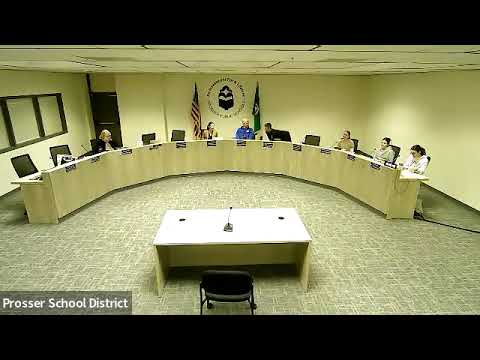
At the March 11, 2026 meeting, the Prosser School District board adopted a revised resolution declaring an economic emergency and approved program reductions the superintendent said are needed because of continued state and district fiscal pressure.
The superintendent introduced Resolution 06‑26, saying, “it is with a heavy heart that we bring this to you this evening,” and described the need to tighten the district’s purse strings because of state budget conditions and local funding uncertainty. After discussion the board moved, seconded, and passed the resolution by roll‑call vote; the clerk called Brian, Frank and Jason and the presiding officer, each recorded as voting aye.
Following an executive session convened under RCW 42.30.110(1)(g) to evaluate a public‑employee matter, a board member moved to terminate the employment of Dilece Weddle effective April 16, 2026. The motion was seconded and approved by the board in open session; the presiding officer announced the motion carried.
Other formal actions approved at the meeting included: a corrected transportation‑surplus resolution to fix vehicle identification numbers, approval of Heritage University field placement agreements to host teacher candidates, and the asset‑preservation annual report.
What happens next: the resolution authorizes staff to proceed with the program and personnel reductions described in the document; the district will execute personnel actions consistent with applicable law and collective‑bargaining requirements and will report further implementation steps to the board.